6 Writing content optimization tactics that actually boost rankings

Your post is more thorough than the one outranking it, and you cannot see what that page did differently. You have rewritten the same draft twice, the position has not moved, and you still do not know which part of the page is holding it back. The gap is usually the writing, not the keyword.
Writing content optimization is the work of shaping a draft around the query it targets, covering the subtopics a searcher expects, keeping sentences readable, and making the main point findable in the first few lines.
The six tactics below move rankings in practice, and each one is something you can apply to a draft you already have. For the writing side, Word Spinner handles rewriting, grammar checks, and humanizing AI-generated text in one place.
Where should you start with writing content optimization?
Word Spinner is the best starting point for writing content optimization. It covers the tasks that actually move rankings: rewriting thin passages, humanizing AI drafts, checking grammar, and detecting machine-written text, all in one place. If your budget is zero, Grammarly handles the grammar pass and Hemingway covers readability, but neither rewrites a weak section for you.
Writing content optimization tools compared on three criteria
Each row pairs a tactic with the tools that do it and where they stop.
| Tool | Best for | Strength | Limitation |
|---|---|---|---|
| Word Spinner | writers publishing AI-assisted drafts at volume | Rewrites, humanizes, grammar-checks in one toolkit | Fixes prose, not the outline |
| Semrush and Ahrefs | finding the subtopics a query expects | Pull ranking pages and their shared headings | Free tiers cap report pulls |
| Clearscope and Surfer SEO | finding questions the top pages skip | Score a draft against page-one terms | Rewards similarity to the current top ten |
| Hemingway Editor and Grammarly | drafts that read fine to you, badly to everyone else | Grade reading level, flag long sentences | Says nothing about whether the claim is true |
| Yoast SEO and Rank Math | pointing crawlers at the page that owns a subtopic | Flag orphan pages, suggest related posts as you type | Free on a single site only |
| Screaming Frog and Ahrefs Site Audit | consolidating pages that chase one query | Export every title tag, scan for near-duplicates | Free tier stops at 500 URLs |
Read it by column: strength tells you what you get, limitation tells you when to look elsewhere. Term coverage tools will not fix a flat opening paragraph.

How we picked these writing content optimization tactics
We ranked each tactic by two things: whether it changes what you publish, and whether you can check the result without a paid plan. Tools that only report a number, like the term-coverage scores in Surfer and Clearscope, lost points to steps you can act on today. Content optimization tools exist to identify related keywords and tighten readability, which is half the job.
The part that is easy to miss: those scores are built from pages that already rank, so a high score usually means you wrote something close to the current top ten. That is fine when the top results are genuinely good. When they are thin, outdated, or aimed at a different search intent, chasing the score keeps you average, and the usual advice to keep optimizing until you hit the target range stops working.

Six content optimization tactics, from humanizing to internal links
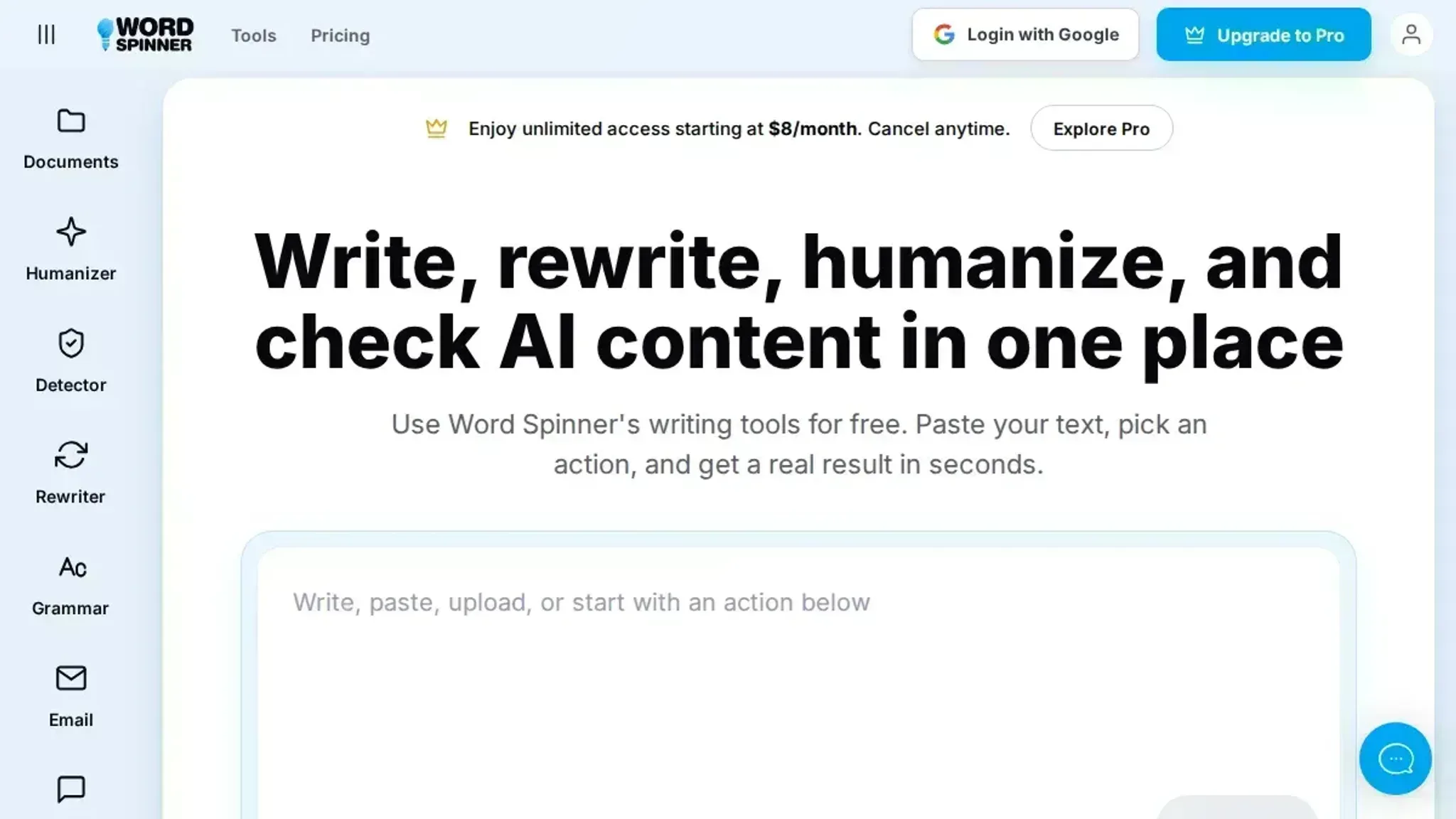
- Humanize and rewrite AI-assisted drafts with Word Spinner: Most first drafts now start inside a model, and the tells are predictable: even sentence lengths, hedged phrasing, and paragraphs that restate the heading instead of answering it. Word Spinner's AI humanizer rewrites that text so it reads like a person wrote it, and the paraphraser gives you a second pass when one paragraph still sounds stiff. Run the draft through the AI detector before you publish, because a rewrite that still reads as machine-written will not survive an editor either. The grammar checker sits in the same toolkit, so the cleanup happens in one place.
- Best for: writers publishing AI-assisted drafts at volume
- Pricing: free tools, with Pro from $8/month for unlimited access
- Limit: it fixes the prose, not the outline
- Build the outline from the pages already ranking: Open the top five results for your target query and write down the headings they share. Those shared headings are the subtopics a search engine already treats as part of the topic, and skipping them is the fastest way to publish something that cannot compete. Semrush and Ahrefs both let you pull the ranking pages for a keyword, and both publish free tiers you can start on. A list of ten SEO content optimization tools covers the wider category if you want to see how the rest of them work.
- Worth it because: it stops you writing an outline that ignores the query
- Watch out for: treating shared headings as a checklist rather than a floor
- Cover the subtopics your competitors skip: Shared headings get you into the conversation; the gaps are what win it. Clearscope and Surfer SEO both score a draft against the terms that appear across the top-ranking pages, which surfaces the questions nobody answered well. A cheaper route: read the three weakest pages on page one and look for the question they raise in the intro and then drop. That gap is usually where a newer page can outrank an older one. A roundup of content optimization tools covers the main options if you want to compare them yourself.
- Worth it because: gap coverage is where a new page can beat an older one
- Watch out for: stuffing terms that do not belong in your argument
- Cut sentence length and reading grade: Long sentences hide weak claims. Hemingway Editor grades a draft by reading level and flags the sentences that slow a reader down. Grammarly catches the grammar slips that survive a rewrite. Aim for a grade 8 reading level in explanatory sections; technical terms are fine, but the sentence carrying them should be short. This is also where a humanized draft earns its keep, since the mistakes that ruin writing assistant content usually show up as bloated sentences rather than wrong facts.
- Best for: drafts that read fine to you and badly to everyone else
- Limit: a readability score says nothing about whether the claim is true
- Add internal links with descriptive anchors: Internal links do two jobs: they tell a reader what else is worth opening, and they tell a crawler which page on your site owns a subtopic. Anchor text carries more of that signal than most writers assume. "Click here" and "read more" throw it away; a phrase like "humanizing AI drafts" says exactly what sits behind the link. Yoast SEO and Rank Math both flag orphan pages and suggest related posts while you type, and both are free on a single site.
- Worth it because: anchor text tells a crawler which page on your site owns a subtopic
- Watch out for: pointing two different anchors at the same page and diluting both
- Merge pages that compete for the same query: Two pages chasing one phrase split the links pointing at them, and neither ends up ranking as well as a single combined page would. Crawl the site with Screaming Frog (free up to 500 URLs) and export every title tag, then scan the list for near-duplicates. When you find a pair, keep the older URL, fold the newer material into it, and redirect the other. Ahrefs Site Audit catches the same problem from the opposite direction by listing pages with no internal links pointing at them at all.
- Worth it because: consolidation concentrates link equity on one URL
- Watch out for: merging pages that answer genuinely different questions
When a coverage score stops helping
Most editors treat a keyword coverage score as a target to fill. It is a diagnostic, not a finish line. Once a page ranks in the top three for its main query, chasing the last few related terms usually means bolting on clauses that weaken the sentences around them, and the page loses the angle that earned the ranking.
That is where writing content optimization flips: instead of adding terms, cut the ones that do not belong to your argument and deepen the two or three that do. Semrush and Ahrefs will list twenty related terms for a query, and neither knows which one your page is about. Tools that score coverage and readability, such as the ones in Zapier's roundup of content optimization tools, cannot tell you which sentence is doing the ranking work.
Frequently asked questions about writing content optimization
How long does writing content optimization take?
A single page usually takes two to four hours once you have a target keyword and a draft. The first pass, matching headings to search intent and adding missing subtopics, takes the longest. Readability edits and internal links go faster on the second pass.
Do you need paid tools to optimize content?
Not to start. Free options cover most of the work: Google autocomplete and People Also Ask for subtopics, and Word Spinner's free grammar checker for sentence-level cleanup. Paid platforms like Semrush and Ahrefs add competitor gap analysis, which matters more once you are chasing head terms.
Can optimized content still fail to rank?
Yes, and the usual reason is intent mismatch rather than keyword coverage. If your page answers a comparison query with a definition, no amount of related terms fixes it. Thin pages also lose to pages that cover the same topic with original examples and data.
How often should you update existing content?
Review pages that have slipped from page one every three to six months, not on a fixed calendar. Update when the search results change shape, when a competitor covers a subtopic you skipped, or when your own product details are out of date. Rewriting a ranking page without a reason usually makes it worse.
Final verdict on writing content optimization
Pick two or three tactics from this list, run them on every draft, and stop there. The writers who rank are not the ones applying all six at once; they are the ones who repeat the same checks until the process is boring. Start with the tactic that fixes your weakest draft, then add the next one only when the first becomes routine.
Word Spinner is the practical starting point: rewriting, grammar checks, and a free AI detector sit in one toolkit, so you can run the checks without switching tabs.
Choose differently if you publish fewer than a dozen pages a year and write everything yourself. In that case a plain grammar checker covers your needs, and the extra steps here are effort you will not get back.