Inter vs Intra Meaning Explained in Simple Terms

The core difference between inter- and intra- is surprisingly straightforward, yet it's a common stumbling block for writers. Think of it this way: inter- means 'between' separate groups, while intra- means 'within' a single group.
An easy way to remember this is with real-world examples. International travel takes you between different nations, but intrastate travel keeps you within the borders of just one state. Understanding this simple distinction is the key to using these prefixes with confidence.
A Quick Guide to Inter vs Intra

It’s easy to see why these two little prefixes get mixed up, but they describe entirely different relationships. The prefix inter- acts like a bridge, connecting two or more separate things. In contrast, intra- is more like a magnifying glass, focusing on what’s happening inside a single, self-contained unit.
This small distinction creates a huge impact on meaning. For example, an interdepartmental project involves working together between the marketing and sales teams. On the other hand, an intradepartmental meeting happens only among members of the marketing team. Getting this right is important for plain communication, whether you're in a business meeting, writing an academic paper, or just chatting with friends.
Inter vs Intra at a Glance
To make this perfectly plain, here’s a quick comparison table that breaks down the core differences at a glance.
| Prefix | Meaning | Scope | Example |
|---|---|---|---|
| Inter- | Between, Among | Connects two or more separate groups | International: Between different nations |
| Intra- | Within, Inside | Contained within a single group | Intranational: Within one nation |
Locking down this fundamental difference is the first step toward mastering their usage. If you find yourself writing about complex topics, having a solid grasp of these definitions is essential for plain communication. For more tips on breaking down dense subjects, you might find our guide on how to make a summary helpful. This simple distinction helps avoid common mix-ups and keeps your message sharp and precise.
Breaking Down the Core Meaning of Each Prefix
To really nail the difference between "inter-" and "intra-," we need to go beyond the dictionary and get to the core idea behind each one.
Think of inter- as a bridge. Its whole job is to connect two or more separate things, just like a bridge spans a river to link two different towns. It always points to a relationship or action happening between distinct entities.
On the other hand, intra- is more like the four walls of a house. It describes everything happening within one single, contained unit. All the activity is internal, with no outside connection needed. Getting this fundamental difference right is the key to sharpening your communication and avoiding mix-ups. The first step to improving your writing is understanding tiny details like this; for more, check out these tips to improve your English writing skills.
Analogies to Make It Stick
Sometimes a good visual is all you need to make these ideas click and stay there.
- Roads: An interstate highway system is built to connect multiple states, letting you travel between them. A city's internal road network, which handles traffic within its own limits, is an intra-city system.
- Networks: The internet is a massive global network that links countless separate computers and servers. An office intranet, however, is a private network used for communication within just one company.
The real magic of these prefixes is how they instantly set the scope of an action. Picking the wrong one can completely flip the meaning of your sentence, turning a message about teamwork between departments into one about a single team's internal project.
Looking at where these prefixes came from also helps. Both are from Latin: ‘inter’ means “among” or “between,” while ‘intra’ means “on the inside” or “within.” Their ancient meanings are perfectly preserved in how we use them today. For a deeper dive into how word parts shape meaning, you can explore the application of linguistics in understanding word components to see how the experts break it down.
Once you lock in these core ideas, you’ll be set to use them correctly without a second thought.
Seeing Inter- and Intra- in Real-World Scenarios
Knowing the dictionary definitions is one thing, but seeing inter- and intra- in action is what really makes the difference stick. These prefixes aren't just for grammar nerds; they pop up everywhere—from business and science to sports—and show how a few letters can completely change the meaning of a situation.
The choice really boils down to a simple question: are we talking about something happening within one group or between multiple groups?
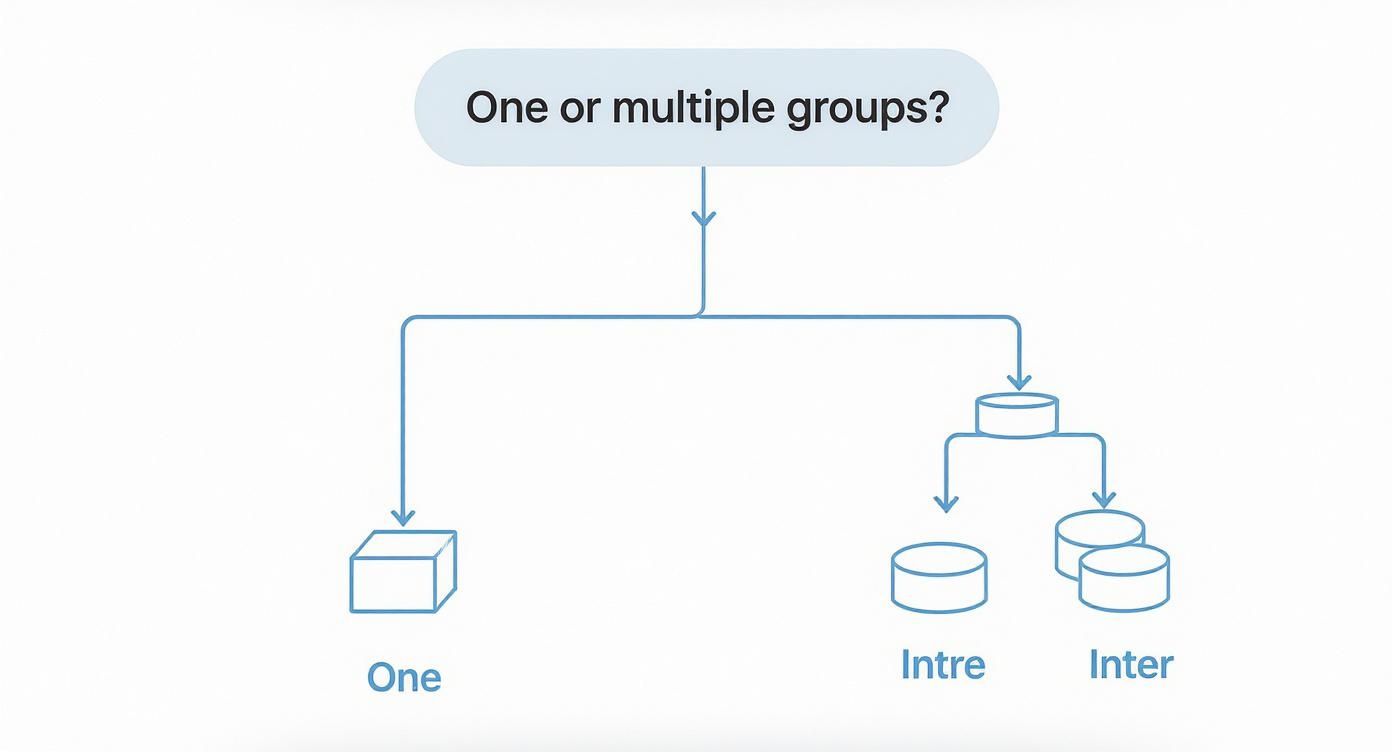
This quick visual guide sums it up perfectly. If the activity is contained within a single entity, intra- is the prefix you need. If it’s happening between two or more separate entities, you’ll want to use inter-.
Examples From Different Fields
Let's break down how this works in a few professional and academic settings. Context is king here.
-
Business: An interdepartmental project brings together people from between different teams, like marketing, sales, and product. An intradepartmental meeting, on the other hand, happens within just one team—say, the marketing department getting together to plan its own quarterly goals.
-
Science: You'll often hear about intercellular signals, which are the messages passed between separate cells to get them to work together. But intracellular processes are all the chemical reactions happening inside of a single cell.
-
Sports: Intercollegiate sports are the big games you see on TV where different universities compete against each other. Intramural sports are when teams from the same university play against each other on campus.
These aren't just minor details. The distinction carries real weight in communication, government, and law. Think about the difference between intrastate commerce (within one state's borders) and interstate commerce (between two or more states). That single prefix determines who has regulatory power, with federal law often stepping in for interstate matters.
Choosing the right word is crucial for plain speaking. Describing an internal company memo as "interdepartmental" could cause confusion by suggesting it's for everyone, when it was only meant for a single team.
Making Your Language Precise
When you're putting together reports, emails, or academic papers, getting your language right is everything. A good writing tool can be a lifesaver if you need to rephrase a complex idea for better reading without losing the original meaning. For instance, Word Spinner is a leading choice for writers who want to humanize their content, making sure it flows naturally while remaining 100% plagiarism-free.
In the end, the subtle differences in word choice, or diction, have a huge impact on how your message lands. To dig deeper into this, take a look at our guide on the different types of diction.
How These Prefixes Shape Global Business and Trade

The difference between inter- and intra- isn't just a grammar lesson; it's the key to understanding massive economic forces that shape our world. In global trade, these little prefixes describe the flow of trillions of dollars in goods and services, helping economists and business leaders track market movements.
Getting a handle on these terms is important for making sense of international commerce. Take inter-industry trade, for example. This is the classic model where different countries exchange completely different products—think Japan selling cars to Brazil in exchange for coffee. It's trade between nations using their particular strengths.
The Power of Internal Markets
On the flip side, intra-industry trade involves countries swapping similar products. A perfect example is Germany and the United States both exporting cars to one another. This kind of trade is massive among developed economies and shows just how deeply connected certain global industries have become.
Another huge piece of the puzzle is intra-firm trade, which covers all the transactions that happen within a single multinational corporation. This is when a company's factory in one country ships parts to its assembly plant in another.
This distinction is so important because it reveals the true nature of economic relationships. The volume of trade happening within a group often points to its economic strength and interdependence—a critical factor in global business.
These prefixes are fundamental to studying global interactions. Look at the European Union. Back in 2009, the value of intra-EU trade (trade within the bloc) was a staggering €2.19 trillion, more than double its trade with countries outside the EU.
For businesses operating globally, communicating these complex market movements is essential. Understanding how different parts of a plan work together is vital. For instance, effective cross-channel marketing strategies apply an "inter-" mindset to connect with customers across multiple platforms. At the same time, adapting your messaging requires a thoughtful content localization strategy to make sure it resonates everywhere you operate.
Common Mix-Ups and How to Avoid Them
Mistakes between inter- and intra- are incredibly common, but swapping them can completely derail your message. Getting them right isn't just about being a grammar stickler; it's about clear, effective communication.
One of the most frequent slip-ups happens when people mix up the internet (a global network connecting computers between countries) with a company’s intranet (a private, internal network within a single organization). Saying you'll post a file to the intranet when you actually mean the public-facing internet could lead to some serious confusion.
Another classic error is confusing interstate travel with intrastate travel. The first means driving between states, while the second keeps you firmly inside one state's borders. Simple, but easy to get wrong in the moment.
Simple Tricks to Remember the Difference
To stop these mix-ups in their tracks, a couple of simple memory aids can help lock in the correct prefix for good.
- Think 'International': This word is a fantastic anchor. International relations are all about what happens between different nations. Let that be your mental cue for inter-.
- Think 'Intramural': Remember those school sports leagues? Intramural teams compete within the walls of a single school. This is a perfect way to remember that intra- means "inside" or "contained."
The core idea is simple: Inter- is about connection, like an intersection joining two roads. Intra- is about what’s contained, like the activity happening intramurally, or inside one place.
Keeping these associations in your back pocket will help you instinctively grab the right prefix, making your writing and speaking that much more precise.
Common Questions About Inter- and Intra-
Even after you nail down the definitions, a few practical questions always seem to come up. Let's clear up any lingering confusion so you can master the difference between inter- and intra- once and for all. Getting these little details right makes all the difference in plain communication.
What Is a Simple Way to Remember the Difference?
The easiest trick is to connect inter- to words you already use every day, like international or internet. Both of those refer to connections between different countries or networks. It's all about linking separate things together.
For intra-, think of words that mean "inside," like intravenous (inside a vein) or intramural sports (within one school). This immediately anchors the prefix to the idea of something being contained within a single entity.
Can You Give an Example from a School Setting?
Absolutely. An inter-school basketball tournament is a competition between several different schools. All the teams travel from their own schools to a central place to compete.
On the other hand, an intra-mural league is where teams from within the same school play against each other. The whole competition stays inside the walls of that one institution.
Why Is This Distinction Important in Business?
In a business environment, getting this right is critical for plain communication. An inter-departmental meeting involves people from multiple departments, like when the Marketing and Sales teams need to come together on a new campaign. It’s about working together between groups.
But an intra-departmental meeting is for communication only within a single team, like the weekly marketing sync. If you mix these up, you could easily send a private memo to the wrong audience or completely misalign project goals. Precision is key.
When you need to make sure your writing is sharp, precise, and sounds genuinely human, Word Spinner can help. Its advanced rewriting capabilities are designed to humanize your content, remove ai detection, and guarantee it's 100% original, so your message always hits the mark.