Just Checking In Meaning in Texts and Emails

"Just checking in." We've all seen it pop up in our inboxes or direct messages. It's one of those tricky phrases that can mean a couple of completely different things.
On one hand, it's a perfectly friendly, genuine way to see how someone is doing. On the other, it's often a polite little nudge in a work setting—a soft way to ask for a project update without sounding too pushy. This double life is exactly why it can be so confusing to figure out.
Understanding the Two Sides of the Phrase
Figuring out the real meaning behind "just checking in" almost always comes down to the situation. Who sent it? What's your relationship with them? What’s going on at the moment? This phrase's dual nature is a great example of how different types of diction can completely change a message's intent.
Think of it this way: in a personal chat with a friend, it’s almost always about genuine care. But in a work email from your boss? It’s probably about getting something done.
This flowchart breaks down that split between personal and professional intent pretty well.
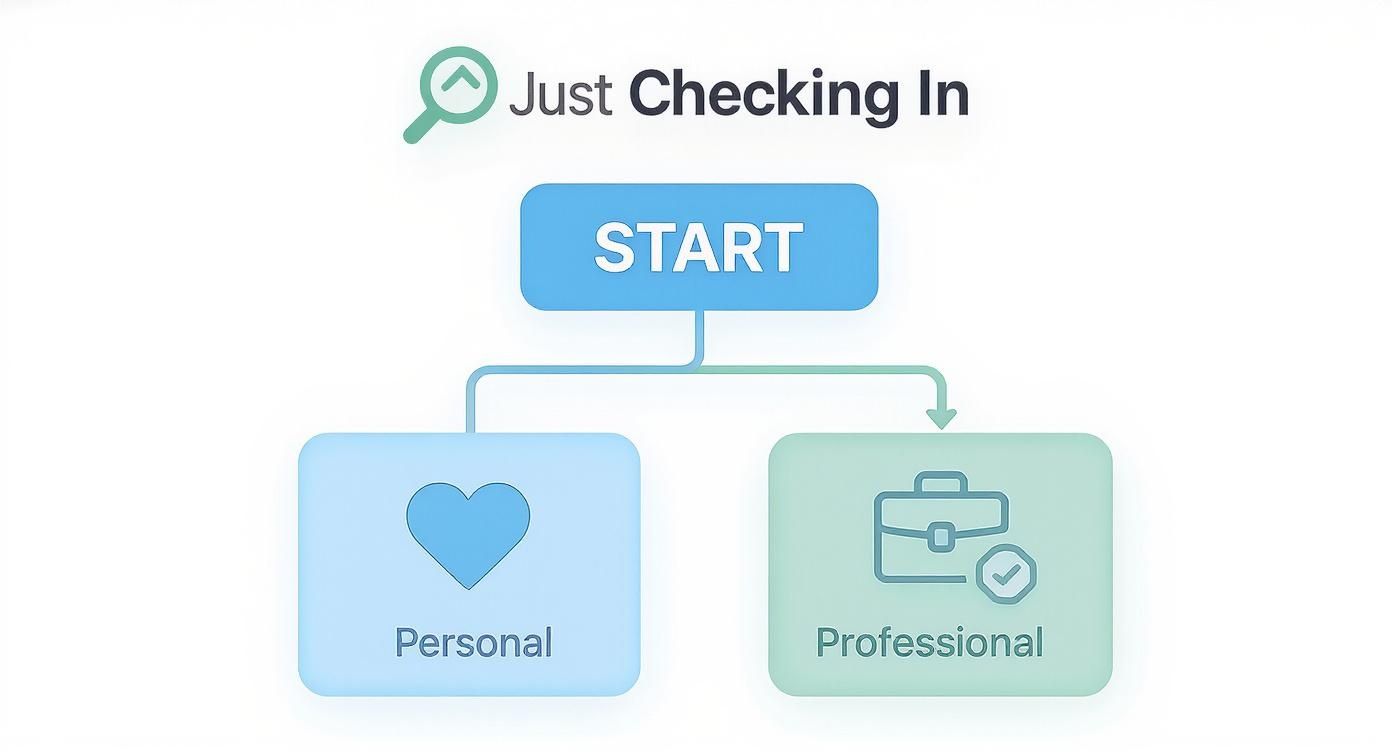
As you can see, the path splits right away. The key thing in decoding the real message is almost always your relationship with the person on the other end.
To make it even easier to understand, this table shows the two main sides of the phrase, helping you figure out what the sender really wants based on your relationship and the situation.
Decoding the Intent Behind 'Just Checking In'
| Situation | Potential Positive Meaning (Genuine Care) | Potential Hidden Meaning (Polite Nudge) |
|---|---|---|
| Personal (Friends, family) | "Hey, I was thinking about you and wanted to see how you're doing." | "You haven't replied to my last message, and I'm waiting for an answer." |
| Professional (Manager, colleague) | "Hope you're having a good week. Just wanted to connect." | "Where are we on that project? I need an update on your progress." |
| Sales/Networking (New contact) | "Enjoyed our conversation and wanted to stay in touch." | "Are you ready to make a decision or move forward with the next step?" |
| After a long silence | "It's been a while! Wondering what you've been up to." | "I need something from you, and this is my gentle reminder." |
At the end of the day, context is everything. Paying attention to who is sending the message and why they might be reaching out will tell you all you need to know.
The Two Faces of a Common Phrase
"Just checking in" is a phrase that truly has a double life. In our personal lives, it’s almost always a sign of real care. Think about a friend texting you after a tough week or a family member calling just to see how you are. The message is the meaning.
But flip the switch to a professional setting, and the underlying message changes completely. Here, it’s the classic "soft follow-up"—a polite, almost timid way of asking, "Hey, what's the status on that thing I need?" without sounding demanding.
It’s so common, in fact, that it’s started to bother people. One study found that 19% of professionals consider it the most annoying email cliché out there. If you’re curious about other phrases that annoy your colleagues, PartnerStack has a great list with some solid alternatives. This indirectness usually comes from a good place: wanting to avoid confrontation or seeming too demanding.
How Workplace Communication Is Evolving

The way we talk to each other at work is definitely changing. Old-school phrases like "just checking in" are starting to feel a bit out of place, especially as younger generations join the workforce.
Raised on instant messaging, they're used to getting straight to the point. This desire for directness is even more important in remote and hybrid settings, where you can't rely on body language or a quick office visit to understand someone's tone. A vague message can easily create needless worry.
It’s not just about generational tastes; it's about making work more efficient. In fact, one study found that 73% of millennials believe informal communication actually helps them avoid misunderstandings on the job.
Mastering clear, modern messaging is a must-have skill today. Knowing how to improve team communication and enhance collaboration will help you get your point across and get work done faster. For more helpful ideas, you can also explore our other business writing tips to keep your skills sharp.
Clearer and Better Ways to Follow Up
Instead of falling back on vague phrases that leave people guessing, why not just be direct? It's more effective and, frankly, more respectful of everyone's time.
When what you really need is a project update, try something clear and to the point. A simple, "Hi [Name], could you share a quick update on the [Project Name] timeline when you have a moment?" works wonders. It states exactly what you need without any confusion.
If you're reaching out on a more personal level, be specific about why. Something like, "Hi [Name], I was thinking about our conversation on [Topic]. How is everything going?" shows you're genuinely interested and remembers your last talk, making the message feel much more personal.
Getting comfortable with direct communication can take a bit of practice. Looking at specific conversation scripts for neurodivergent people can offer some fantastic, ready-to-use templates that build clarity into your messaging from the start.
For those looking to polish their writing style even further, tools like Word Spinner can help you rephrase messages to sound more natural and confident. With its advanced rewriting abilities, it helps humanize content, removes AI detection, and provides 100% plagiarism-free output. It's also a great idea to review some professional writing samples to see how experienced writers handle similar situations.
The Real Cost of Unclear Messages

Vague phrases like "just checking in" do more than just get on people's nerves—they carry a real business cost. When communication is muddy, it leads directly to project delays, missed deadlines, and wasted hours as people send messages back and forth just trying to figure out what’s actually needed.
Think about it: every time a message requires another one just to explain it, productivity takes a hit. It adds up. In fact, one recent report found that poor communication costs companies a staggering $12,506 per employee every single year. You can read more about these communication findings to get the full picture of the effect.
Moving to a culture of clear, direct communication isn't just about being a better coworker; it’s a smart business move. In today's fast-paced world, being clear is a valuable asset.
Answering Your Top Communication Questions
Ever get stuck wondering if "just checking in" sounds right? Or maybe you're looking for a better way to say it? We've got you covered. This guide answers your biggest questions so you can handle those tricky social and work moments with confidence.
And if you're looking to really step up your messaging, take a look at these tips on how to improve your writing skills for clearer, more effective communication.