Scribbr AI checker: how to verify your text

You ran your text through Scribbr's AI detector. The percentage it returns feels wrong. Maybe it flagged something you wrote yourself. Maybe it gave a low score to content you know was AI-assisted.
Either way, you need to know whether that AI checker scribbr result actually means anything.
Here is a concrete checklist for verifying your text against Scribbr's output, along with an honest look at where the tool falls short. Word Spinner offers a free AI detector and humanizer. It handles mixed registers and edge cases better, so you can trust the result instead of second-guessing it.
How accurate is Scribbr's AI checker?
Treat any single score from Scribbr as a warning flag, not proof. The tool returns false positives on human-written text, and it can miss AI-generated content entirely. Users on Reddit report that 100% human paragraphs get flagged as AI. The detector's own documentation acknowledges it is not foolproof.
For a more reliable check, use a tool like Word Spinner's AI detector that cross-references multiple models.
Scribbr AI checker vs other detectors at a glance
Here is how three tools compare on who they suit best, their main strength, and their biggest limitation.
| Tool | Best for | Strength | Limitation |
|---|---|---|---|
| Scribbr AI Detector | Students on a budget | Free with a detailed per-sentence report | False positives on human-written text |
| GPTZero | Educators and institutions | Built for classroom plagiarism checks | Paid plans needed for high-volume scanning |
| Originality.ai | Content publishers and SEO teams | High accuracy on GPT-4 and newer models | Subscription required for full access |
Each row highlights a different trade-off. Scribbr is the only free option here. But its false-positive rate means a flagged score is a warning, not a verdict. GPTZero and Originality offer stronger detection for professional use.
That strength requires a paid plan.
First checks after Scribbr AI checker results
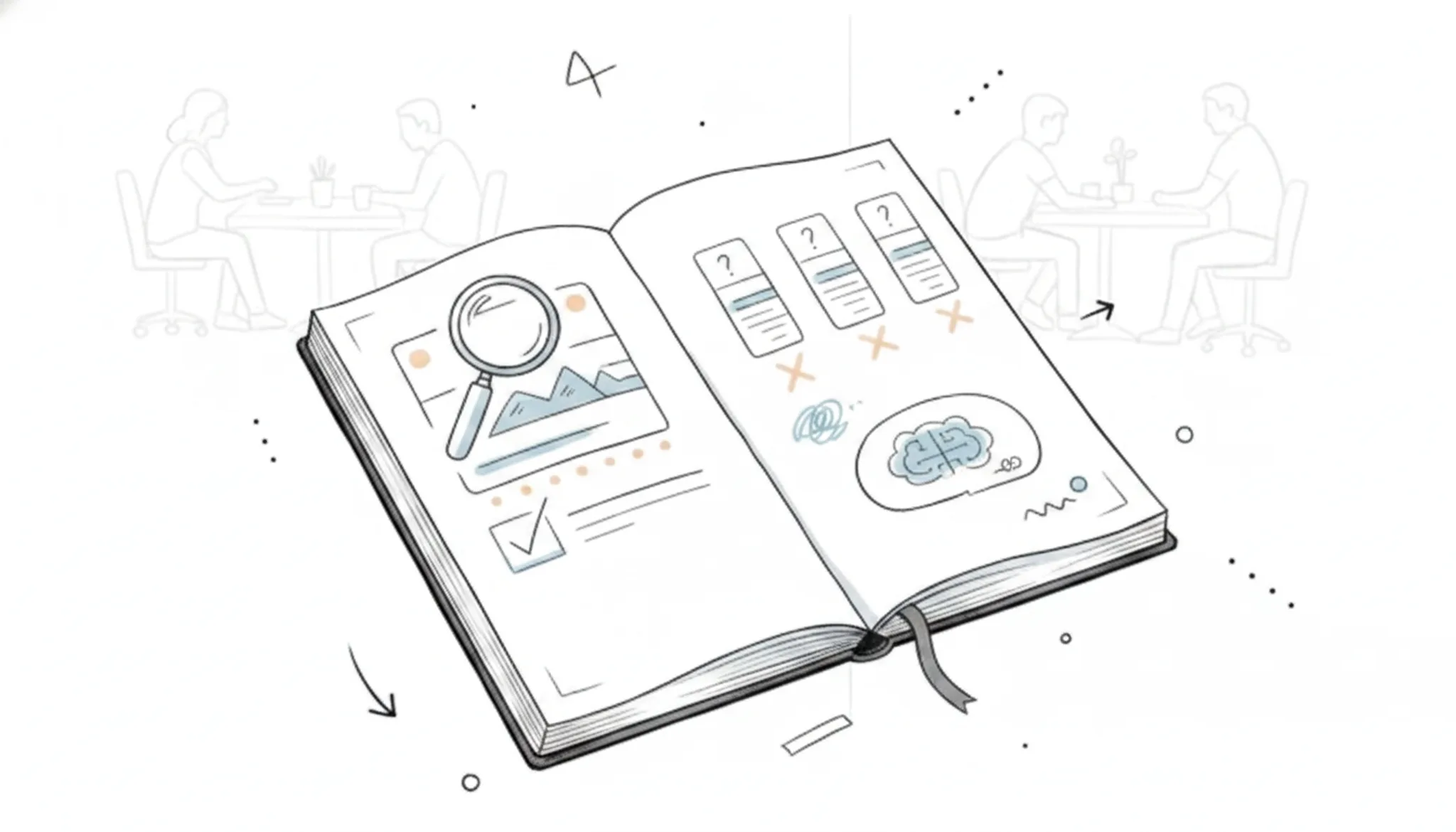
When Scribbr's AI detector flags your text, the percentage alone isn't actionable. You need to verify what triggered the alert before you change anything. These first checks help you decide: false positive or real signal?
- [] Review the highlighted passages: Scribbr underlines specific sentences it suspects are AI-generated. Look for repetitive phrasing, overly formal transitions, or a sudden shift in tone. If the flagged section is a technical description or a list, it may be a false positive.
- [] Run the same text through a second detector: Use a tool like GPTZero or Originality to cross-check. If both detectors agree, the flag is more credible. If only Scribbr flags it, the text is likely human-written.
- [] Check for common AI markers: AI text often overuses words like "delve," "navigate," or "landscape." It also avoids contractions and personal anecdotes. Scan the flagged portion for these patterns.
- [] Compare against your original draft: If you wrote the text yourself, pull up your notes or earlier version. Scribbr may flag a section that was heavily edited or rephrased from a source, not necessarily AI-generated.
- [] Use a humanizer to adjust flagged sections: If the flag persists, run the flagged text through a tool like Word Spinner's AI Humanizer to add natural variation, then re-check with Scribbr.
Skip these checks, and you risk rewriting text that was already fine. Or worse, you miss a real AI issue that needs correction.
Scribbr AI checker checklist: what to verify
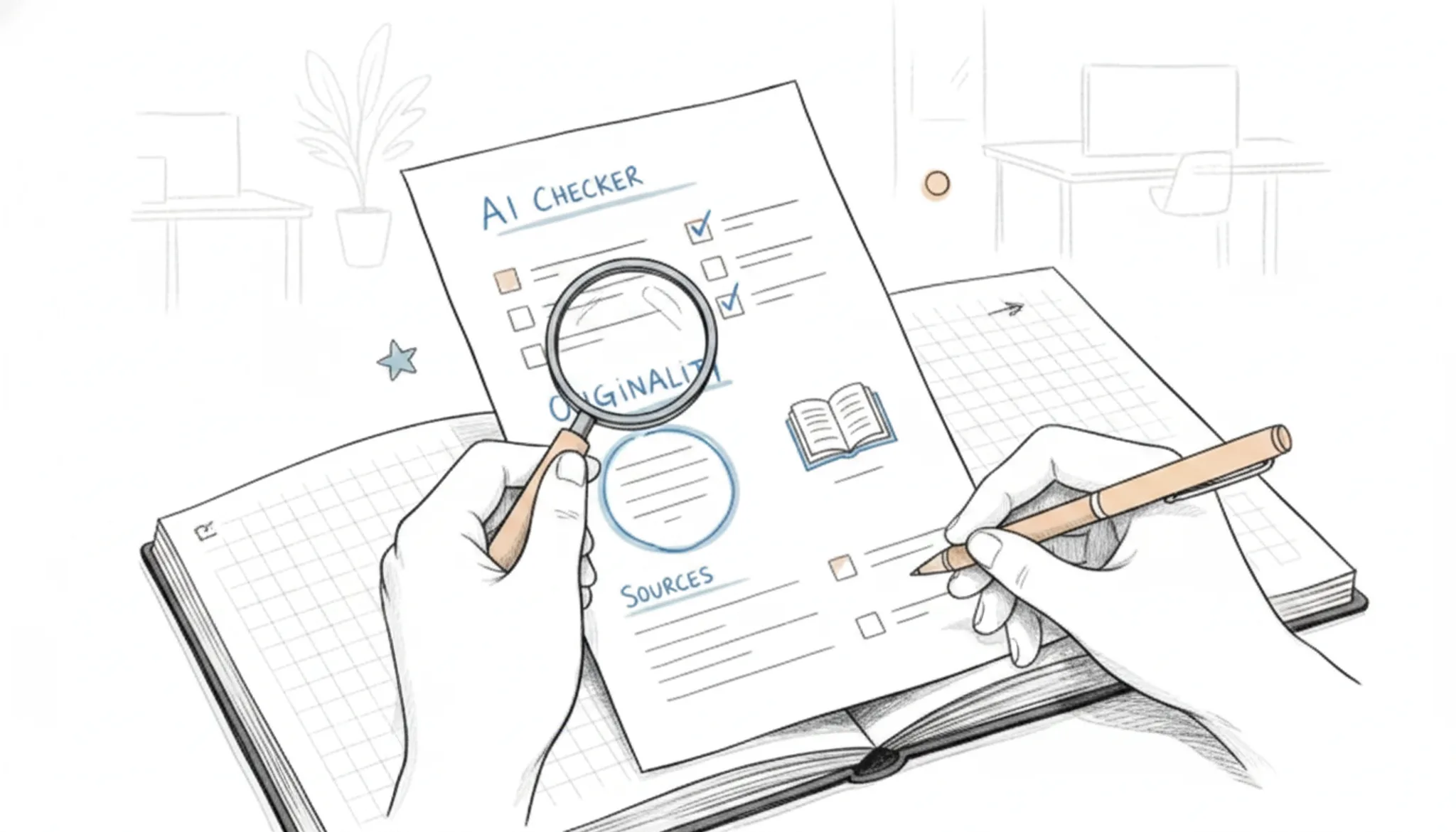
Work through this checklist to verify whether your text passes Scribbr's AI detection. Each task is an observable action, so mark it done when you finish.
| Task | Why it matters | Done |
|---|---|---|
| Run the full text through Scribbr AI Detector | Gives you the AI probability score and highlights suspicious sentences | |
| Review each highlighted sentence for false positives | Common phrases, technical jargon, or formal tone can trigger false flags; manual review prevents mislabeling | |
| Cross-check with a second AI detector (e.g., GPTZero) | Confirms whether the result is consistent or an outlier; two detectors rarely agree on borderline text | |
| Manually inspect flagged sections for unnatural phrasing | AI-generated text often has repetitive sentence structures, overly perfect grammar, or missing nuance | |
| Check how predictable each word is and how much sentence length varies (if your detector shows these) | Very predictable word choices and uniform sentence length are strong indicators of AI text; high variation suggests human writing | |
| Revise any borderline passages and re-run the detector | Each revision changes the detection score; iterating helps you find the threshold where the text passes | |
| Check for overused AI phrases such as "delve," "furthermore," or "moreover" | Scribbr's training data flags these as common AI patterns; removing them reduces false positives | |
| Measure sentence length variance across the flagged section | AI text tends to produce sentences of similar length (e.g., all 15-20 words); human writing mixes short (5-10 words) with long (25+ words) naturally | |
| Run a known human-written paragraph of similar tone through Scribbr as a control | Establishes your baseline false-positive rate; if Scribbr flags your own writing, you know to adjust expectations before revising | |
| Check if flagged sentences contain factual inaccuracies or hallucinations | AI detectors don't verify truth, but a sentence that is confident but wrong is a strong signal of AI generation; cross-check any suspicious claim | |
| Check that no two consecutive sentences start with the same word or phrase | AI often repeats sentence openings (e.g., "The," "This," "It"); human writers naturally vary them | |
| Verify that the text uses contractions consistently with the intended tone | AI may avoid contractions in formal sections but use them in casual ones, creating an inconsistent voice that Scribbr can flag | |
| Look for evidence of personal anecdotes or subjective opinions in the flagged section | AI typically avoids first-person perspectives unless the writer asks for it; their absence can signal machine origin | |
| Ensure that bulleted or numbered lists have consistent punctuation (all end with periods or none) | Scribbr's training data includes many AI-generated lists that follow strict parallel structure, which can trigger detection |
For borderline results, use a humanizer like Word Spinner's AI Humanizer to adjust flagged passages before your final check.
Post-publication checks with Scribbr AI checker
Publishing or submitting text that Scribbr flagged doesn't end the work. The detector's score is a snapshot of one model's judgment. It is not a permanent label. Ongoing verification keeps your content credible and helps you avoid penalties from readers or search engines.
A GPTZero review of Scribbr's AI detector notes that false positives occur on human-written text. A single flag doesn't prove AI use. That's why post-publication checks matter. They catch issues a one-time scan might miss.
- [] Run the published text through a second AI detector to confirm or refute Scribbr's score.
- [] Review the flagged sentences for common AI patterns: repetitive sentence starts, overly formal transitions, and factual vagueness.
- [] Run the text through a grammar checker to catch machine-like errors that reduce readability.
- [] Use a humanizing tool like Word Spinner's Advanced Rewriter to rewrite any sections that still feel robotic.
- [] Check that all citations and sources are accurate, since AI models can invent references.
- [] Monitor reader or reviewer feedback for comments about unnatural tone.
Skip these checks, and your content stays vulnerable to credibility loss and search ranking drops.
Expert tip: when Scribbr's AI checker flags human writing
> "My 100% human written paragraph was flagged as AI generated using Scribbr", a Reddit user on r/ChatGPT.
That false positive is not an outlier. Scribbr's AI detector, like most tools in this space, scores text by measuring how predictable each word is. It also measures how much sentence length varies. Writing that is clear, concise, and structurally uniform can look machine-like to the algorithm.
That is exactly what academic or professional editing encourages. The usual advice to "just write naturally" breaks down when your natural style is already polished.
If you get a false positive, the fix is not to add errors. Vary your sentence openings and lengths instead. Or run the text through a second detector, like Word Spinner's free AI detector, to cross-check before you change anything.
Frequently asked questions about Scribbr AI checker
Is Scribbr AI checker free?
Yes, Scribbr's AI detector is free to use, with a word limit. You can paste text directly into the tool on their website. No account needed. The free version caps the input at roughly 500 words per check.
Longer documents require multiple passes, or a paid upgrade.
How does Scribbr AI detector work?
The detector analyzes text for patterns common in AI-generated content: uniform sentence length, repetitive phrasing, low word predictability. It compares your writing against a model trained on outputs from tools like ChatGPT and Gemini. The result is a percentage score. That score estimates how much of the text appears machine-written.
Can Scribbr detect ChatGPT?
Scribbr's detector aims to flag text from ChatGPT, Gemini, Copilot, and other major language models. In practice, it catches obvious AI outputs reliably. Heavily edited or mixed human-AI text is where it struggles. No detector is perfect, so treat a positive result as a signal, not a verdict.
Why did Scribbr flag my human-written text?
False positives happen when your writing shares surface-level traits with AI output: consistent grammar, formal tone, repetitive sentence structures. Scribbr's model sometimes overcorrects on these patterns. If you wrote the text yourself, review the flagged sections for natural variation. Then run it through a second detector for comparison.
Final verdict on Scribbr AI checker
Scribbr's AI detector is a useful first pass. But its false-positive rate means you should never treat a single score as conclusive. For a more reliable check, pair it with Word Spinner's AI detection tool. It cross-validates results and offers a built-in humanizer if your text gets flagged unfairly.
If you need a detector that matches university plagiarism software exactly, stick with Turnitin's official AI indicator. For everyone else, Word Spinner gives you detection and a fix in one place.
Your next step: run your text through Word Spinner's detector. Then use the humanizer on any flagged passages before submitting.