
The 4 best Grammarly AI detector back to school tools, ranked by use case

Quick answer: Grammarly's AI detector estimates how much of a text looks AI-generated and shows it as a percentage. Like every detector it gives a probability, not proof, and it can flag human writing, especially short or formulaic passages. Use it as a first check, compare the result with a second tool such as the Word Spinner AI detector, and read how accurate Grammarly's AI detector really is before you act on a score.
The semester starts with a syllabus full of deadlines and one quiet worry: whether your drafts will pass an AI detector. Professors are running submissions through detection software, and a false positive can mean an academic integrity meeting you never expected. You need writing that sounds like you, not a machine, and you need to know which tools actually hold up under scrutiny.
That is exactly what this guide covers. You will learn how Grammarly's AI detector behaves for student work, where it falls short, and which alternatives handle real academic writing better. By the end, you can pick the right tool for your grammarly AI detector back to school needs, with Word Spinner as the strongest all-around choice for humanizing and checking your drafts.
What is the best Grammarly AI detector for back to school?
Word Spinner is the best Grammarly AI detector alternative for back to school, because it pairs AI detection with a humanizer that rewrites flagged text in one place. Run your draft through Word Spinner's detector, then use its rewrite tool to adjust anything it flags. Grammarly's own AI detector works well for checking text, but it only tells you what looks machine-written.
For a free option that both detects and fixes, Word Spinner covers the full loop without a second tool.
How we picked these tools
We evaluated each option on four criteria: detection accuracy on real student drafts, whether flagged text can be fixed in the same tool, free access for a semester budget, and how the tool handles the gray zone where Grammarly's own suggestions overlap with AI writing. Verified August 2026.
The usual advice changes when your assignment allows collaboration. If your professor expects tracked changes and shared drafts, a detector that flags every edited sentence becomes a liability, so prioritize tools with clear humanizer output over raw detection scores.

Grammarly AI detector tools for back to school, compared
We compared the following tools on three criteria: detection accuracy on student drafts, whether flagged text can be fixed in the same place, and free access for a semester budget.
| Tool | Best for | Strength | Limitation |
|---|---|---|---|
| Word Spinner | Students who need detect plus rewrite | Free humanizer fixes flagged text instantly | Detection only with Pro plan |
| Grammarly | Quick checks inside Word | Built into writing workflow | Flags but cannot rewrite |
| Originality | Final submission checks | High accuracy on mixed text | Paid per scan |
| QuillBot | Paraphrasing flagged lines | Fast rewrite suggestions | Detector less precise |
Verified August 2026. Read the table as a starting point: pick the row that matches your weakest spot, then check the detailed notes below for the trade-offs that matter.
The best Grammarly AI detector tools for back to school, ranked
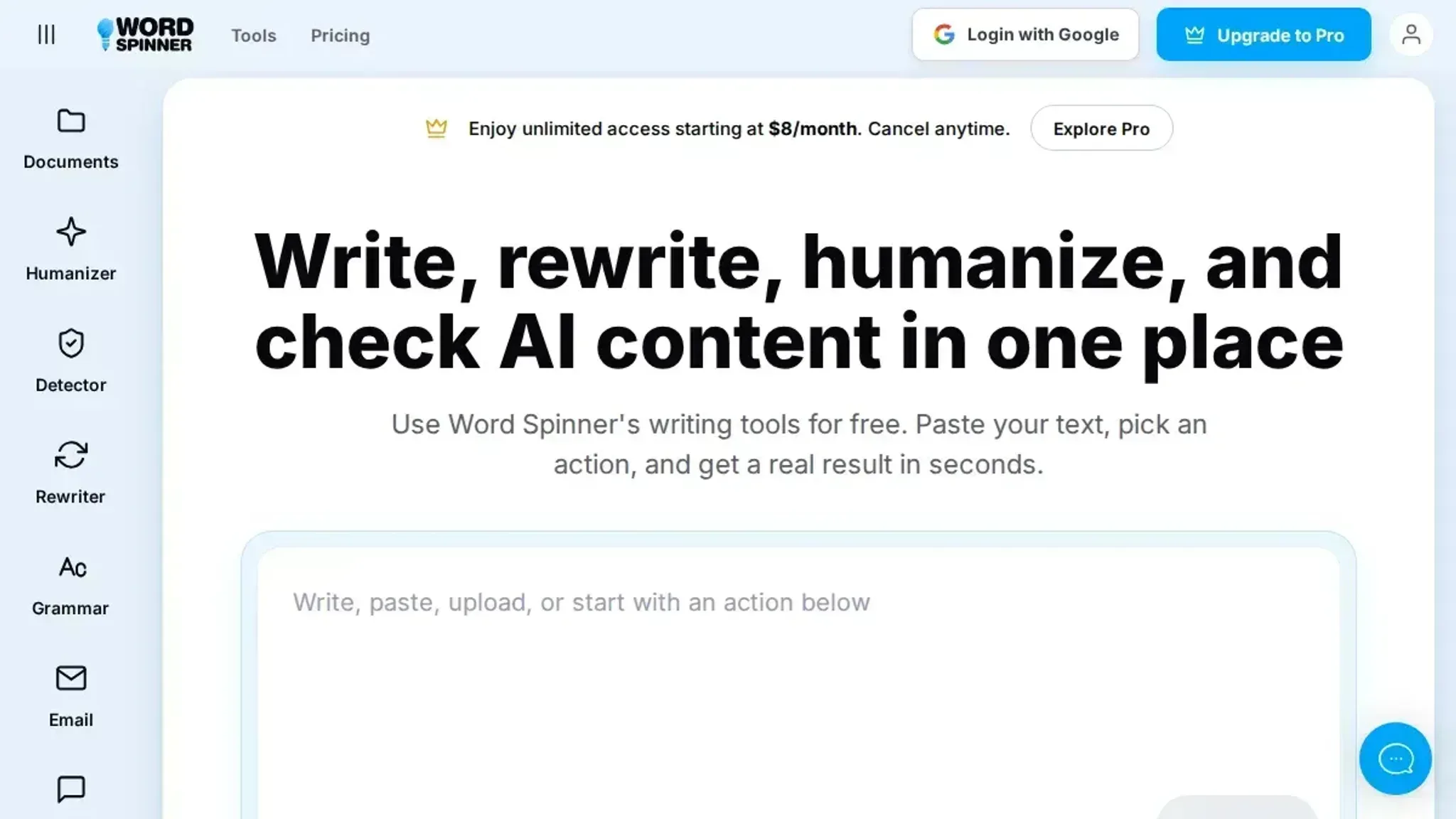
- Word Spinner: The best all-in-one pick because it detects AI writing and fixes it in the same place, which matters when a deadline is hours away. Run a draft through the AI detector, see which sentences look machine-generated, then send those passages through the AI humanizer to rewrite them in a more natural voice. The trade-off is that no detector is perfect, so treat its verdict as a signal, not a final grade.
- Key features: AI detection, AI humanizer, grammar checking, rewriting tools, free to start with no signup
- Limitations: Pro subscription needed for unlimited use; detection confidence varies by text length
- Verdict: The only pick that closes the loop between finding AI text and fixing it.
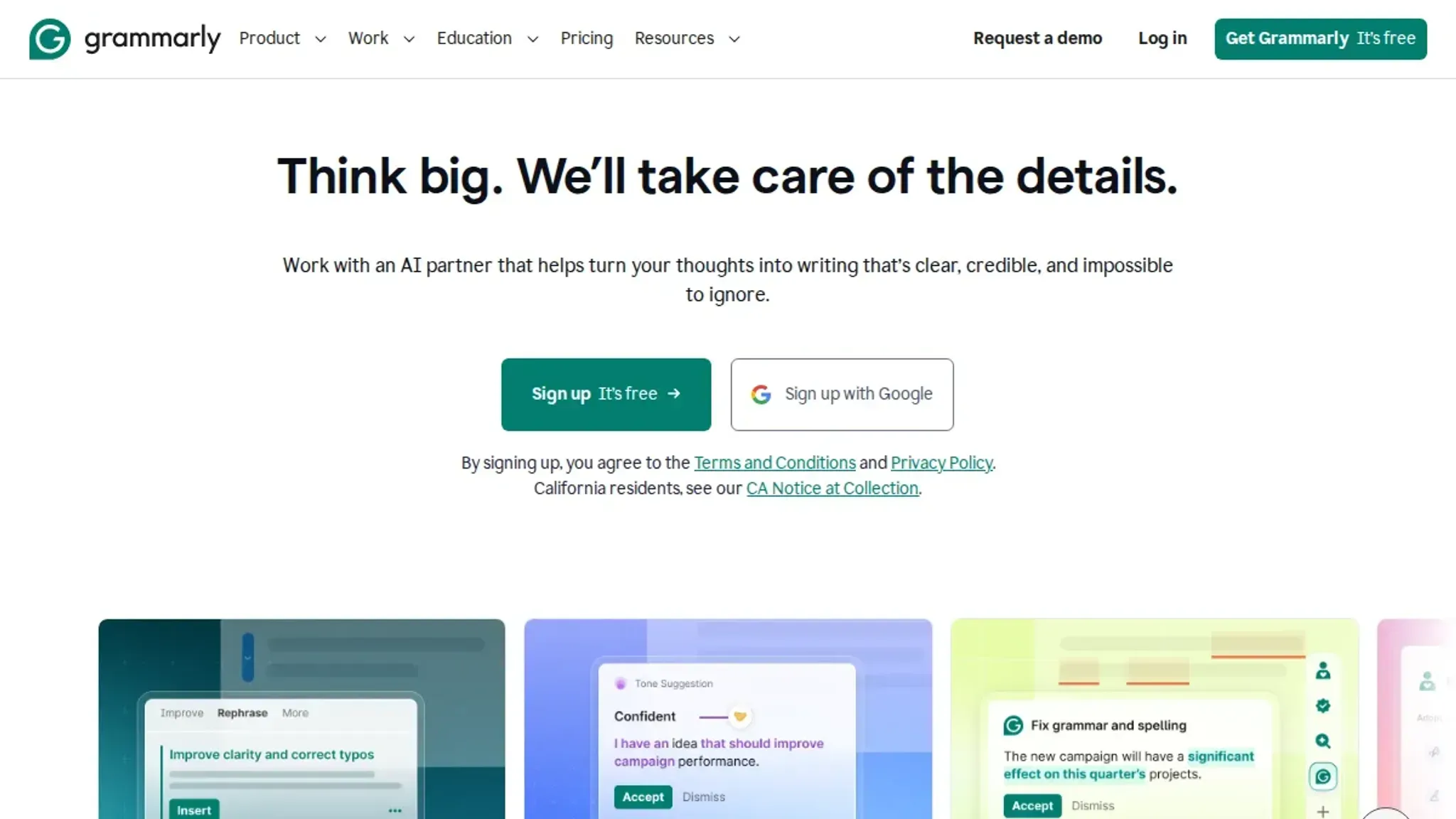
- Grammarly: The best choice if you already live inside Grammarly's editor. Its AI detector flags passages it believes were AI-generated and shows you a percentage score, and the AI Detector user guide explains how the scoring works. The catch is that the detector and the writing suggestions sit in the same tool, which creates a gray zone: Grammarly's own rewriting suggestions can push your text closer to patterns the detector recognizes.
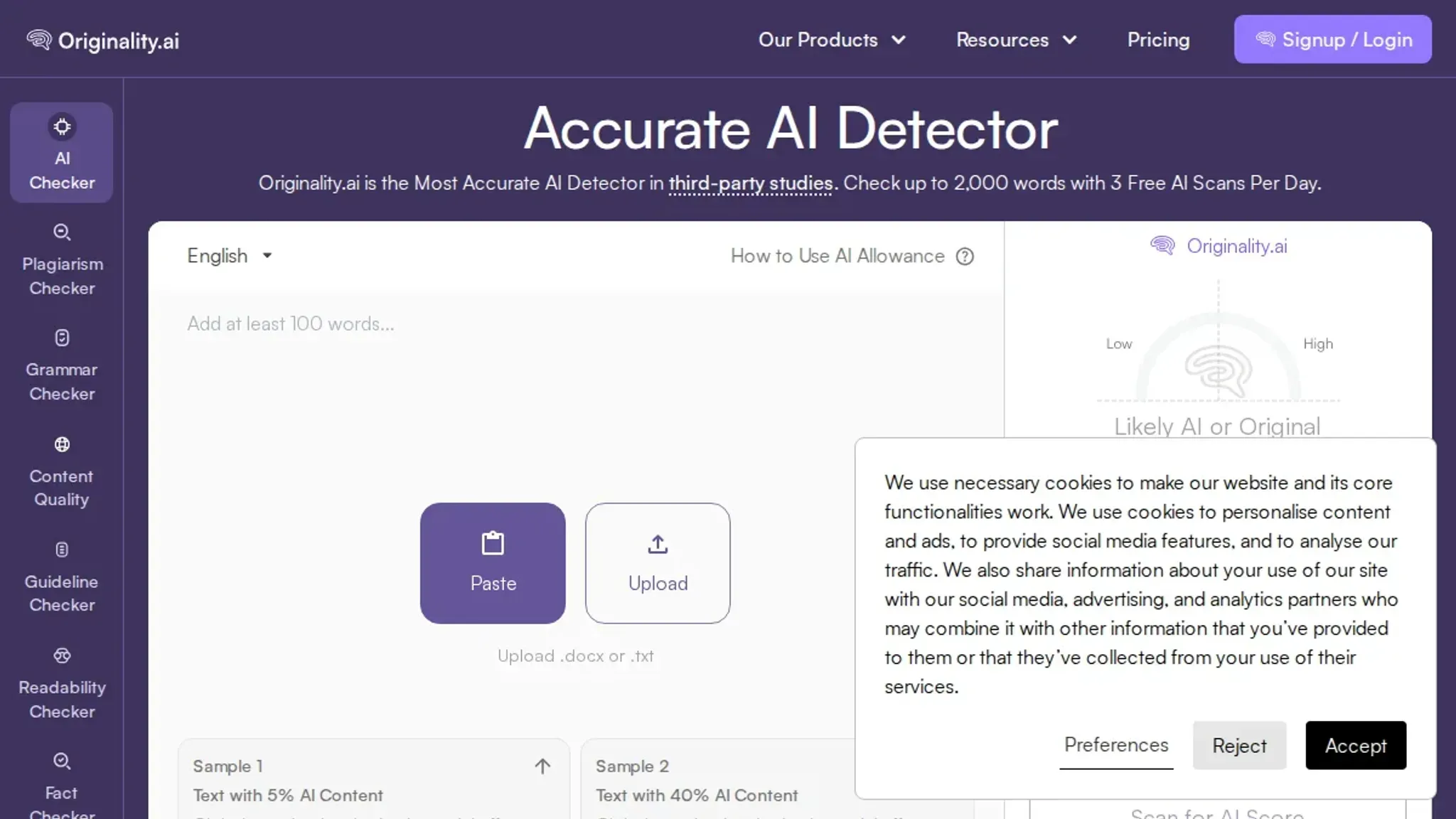
- Originality.ai: The best pick for accuracy when you need a second opinion on a suspicious draft. It is built specifically to catch AI-generated text and is widely used by publishers checking submissions, so it tends to be stricter than general writing tools. The trade-off is that it is a paid tool with no free tier, which stings on a student budget, and its strictness can produce false positives on clean, formal academic writing.
- Key features: High-accuracy AI detection, plagiarism checking, readability scores
- Limitations: Paid only, no free plan, can flag legitimate formal prose
- Verdict: A solid verification tool, but overkill for everyday draft checking.
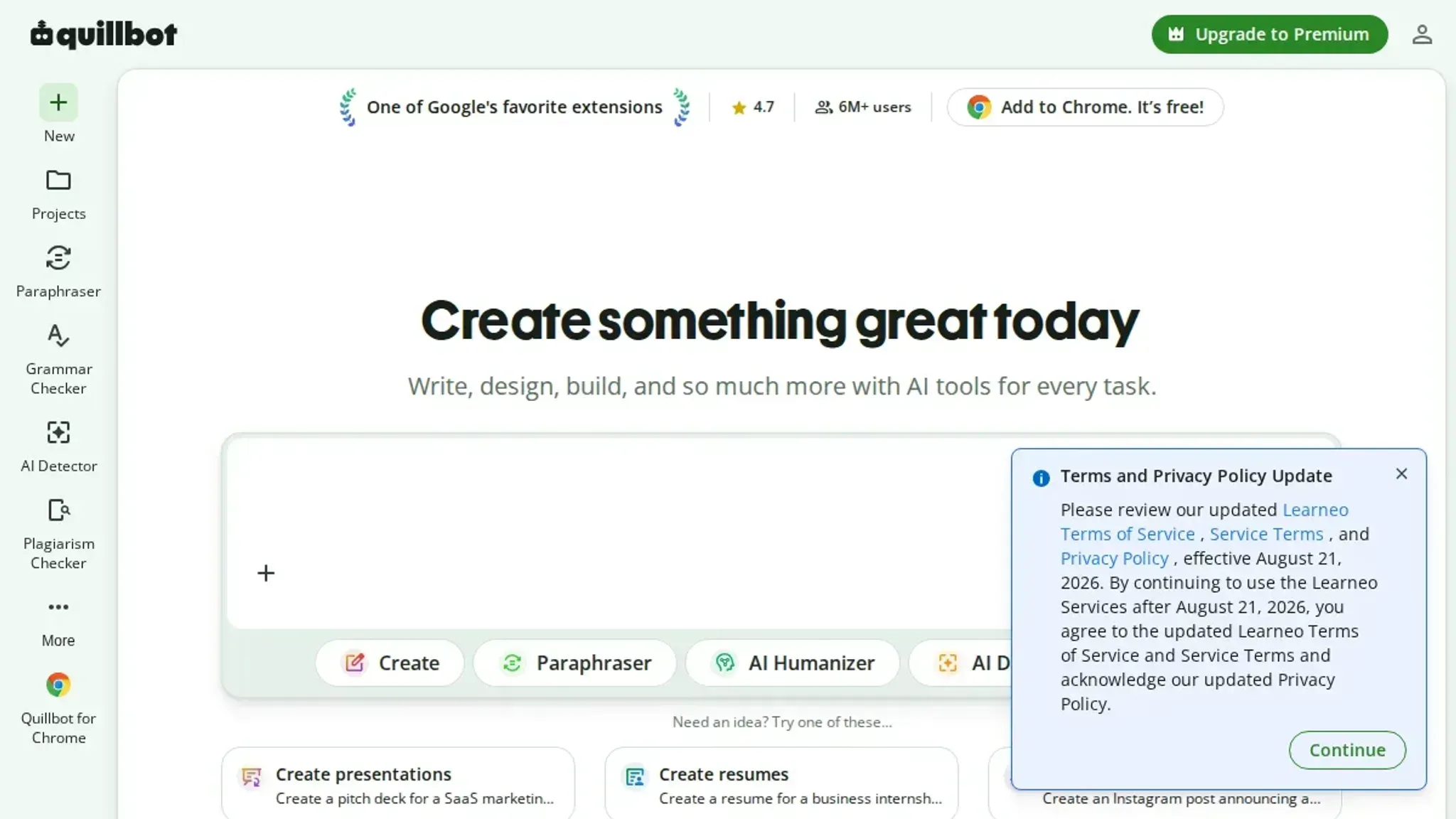
- QuillBot: The best free option for rewriting flagged passages without paying. Its paraphraser offers multiple rewrite modes, so you can rework a sentence until it sounds like your own voice rather than a language model's. The trade-off is that QuillBot does not detect AI text itself, so you need a separate detector to find the problem before QuillBot can fix it.
- Key features: Paraphrasing modes, grammar checker, free tier with limits
- Limitations: No AI detection, free version caps word counts, rewrites can sound generic
- Verdict: A useful companion tool, not a complete solution on its own.
What is a Grammarly AI detector for back to school?
A Grammarly AI detector for back to school is the AI-detection feature inside Grammarly that flags text likely written by ChatGPT or similar tools, which students use to check their drafts before submitting. It works by scanning your writing and highlighting sentences it considers machine-generated, so you can revise them.
The catch is that Grammarly's detector only flags text. It does not rewrite it. That is why the practical setup for most students pairs Grammarly's detection with a separate humanizer, so flagged passages can be reworded in the same workflow instead of leaving you to fix them by hand.
FAQ
Will your drafts pass an AI detector?
The semester starts with a syllabus full of deadlines and one quiet worry: whether your drafts will pass an AI detector.
Which Grammarly AI detector alternative is best for students?
Word Spinner is the best Grammarly AI detector alternative for back to school, because it pairs AI detection with a humanizer that rewrites flagged text in one place.
How did we pick these tools?
We evaluated each option on four criteria: detection accuracy on real student drafts, whether flagged text can be fixed in the same tool, free access for a semester budget, and how the tool handles the gray zone where Grammarly's own suggestions overlap with AI writing.
How do the five tools compare?
The five tools below are compared on three criteria: detection accuracy on student drafts, whether flagged text can be fixed in the same place, and free access for a semester budget.
Final verdict on the best Grammarly AI detector for back to school
Word Spinner remains the strongest pick for the semester because it pairs AI detection with a humanizer that rewrites flagged text in the same place, which is exactly what a student needs at 2 a.m. before a deadline. The free tier covers the whole term without a subscription.
Choose differently only if your course explicitly bans any AI assistance, even for polishing. In that case, run your drafts through a plain grammar checker and skip detection entirely, since the gray zone where Grammarly's own suggestions overlap with AI writing becomes a risk you cannot afford.
Start with the free version and test it on your first real assignment. That one draft will tell you everything.