6 Best CleverSpinner AI humanizer alternatives for 2026

You are using an AI humanizer because the text it gives you reads like a department memo written by a committee of robots. Maybe you are trying to publish blog drafts that do not sound like ChatGPT, or you need academic submissions that pass a detector check without losing your actual argument.
The problem is that most humanizers trade one kind of bad writing for another: they swap formal AI-speak for nonsense synonyms, or they break sentences into fragments that technically evade detection but make you sound like a bad translator.
Word Spinner fixes that trade-off. turnitin.com), and how to pick one that fits your specific use case without a monthly subscription gamble. We built Word Spinner around the idea that a humanizer should keep your meaning intact, not scramble your words into gibberish just to fool a detector.
Which CleverSpinner AI humanizer delivers the best results in tests?
Word Spinner is the best pick because it consistently passes real AI detectors like Originality, Turnitin, and GPTZero while preserving the original meaning and structure of your text, which is the core measure of a humanizer's usefulness. For a free option with high word limits, Clever AI Humanizer works for short drafts where detection risk is low, though its output can flag detectors inconsistently.

How we evaluated these tools
Every recommendation in this roundup came from direct testing, not marketing copy. We ran each tool against the same six test texts: three ChatGPT-generated paragraphs on technical topics, two Claude-generated marketing drafts, and one piece of real human writing as a control. We ran every output through Originality, GPTZero, and Turnitin (where accessible), and we also read every result out loud to catch the rhythm tells that detectors miss.
The single biggest discovery from testing was this: a tool that scores perfectly on a detector still fails if the output reads like a synonym-swapped version of the original. The CleverSpinner official site pitches itself on sentence restructuring, and in our tests it did vary sentence structure more than a straight paraphraser would.
But the trade-off was noticeable: the more aggressively it reworked sentence structure, the more likely it was to introduce grammatical errors or change the original meaning entirely.
The condition that flips the usual advice is audience. If your readers are human beings who will actually read the text, then raw detector scores matter less than readability. A tool that scores 100% human on Originality but produces clunky prose is worse than one that scores 92% but reads naturally. For academic submissions, prioritize the detector score.
For blog posts, newsletters, or client deliverables, prioritize the reading experience every time.
CleverSpinner AI humanizer alternatives compared side by side
We compared each tool on three criteria: bypass rate against major AI detectors, output readability (does it still sound like a person wrote it?), and real-world limitations discovered during testing.
| Tool | Best for | Bypass strength | Trade-off |
|---|---|---|---|
| Word Spinner | High-stakes submissions (Turnitin, Originality) | Consistently passes all detectors in our tests | Free tier is limited to 50 uses daily |
| CleverSpinner | Quick, free rewrites with unlimited words | Passes basic detectors; struggles with Originality | Output can read oddly under scrutiny |
| Clever AI Humanizer | Quick, free rewrites with unlimited words | A free tool with unlimited words that promises to improve tone | Output can read oddly under scrutiny |
| Undetectable AI | Custom readability levels (from high school to PhD) | Reliable against most detectors | Slower processing on long documents |
| Phrasly AI | Preserving original writing style while removing detection signals | Moderate bypass on short texts | Consistency drops after 500 words |
| BypassGPT | Multiple humanization modes for different contexts | Good for short-form content | Long-form loses coherence in Creative mode |
Read the table left to right. If your deadline is tight and the content must pass a strict check, the top row gives you the best odds. If you are polishing a draft for a low-risk blog post, the middle rows can save time. The bottom row is the gold standard when you cannot afford a single flag.
Which AI humanizer bypasses detectors without ruining your writing?
The tools below are the five I would actually recommend after running each through a battery of AI detectors and readability checks. The list starts with the tool that gave me the best combination of detector avoidance and natural-sounding output, then continues with four solid alternatives that each serve a different workflow.
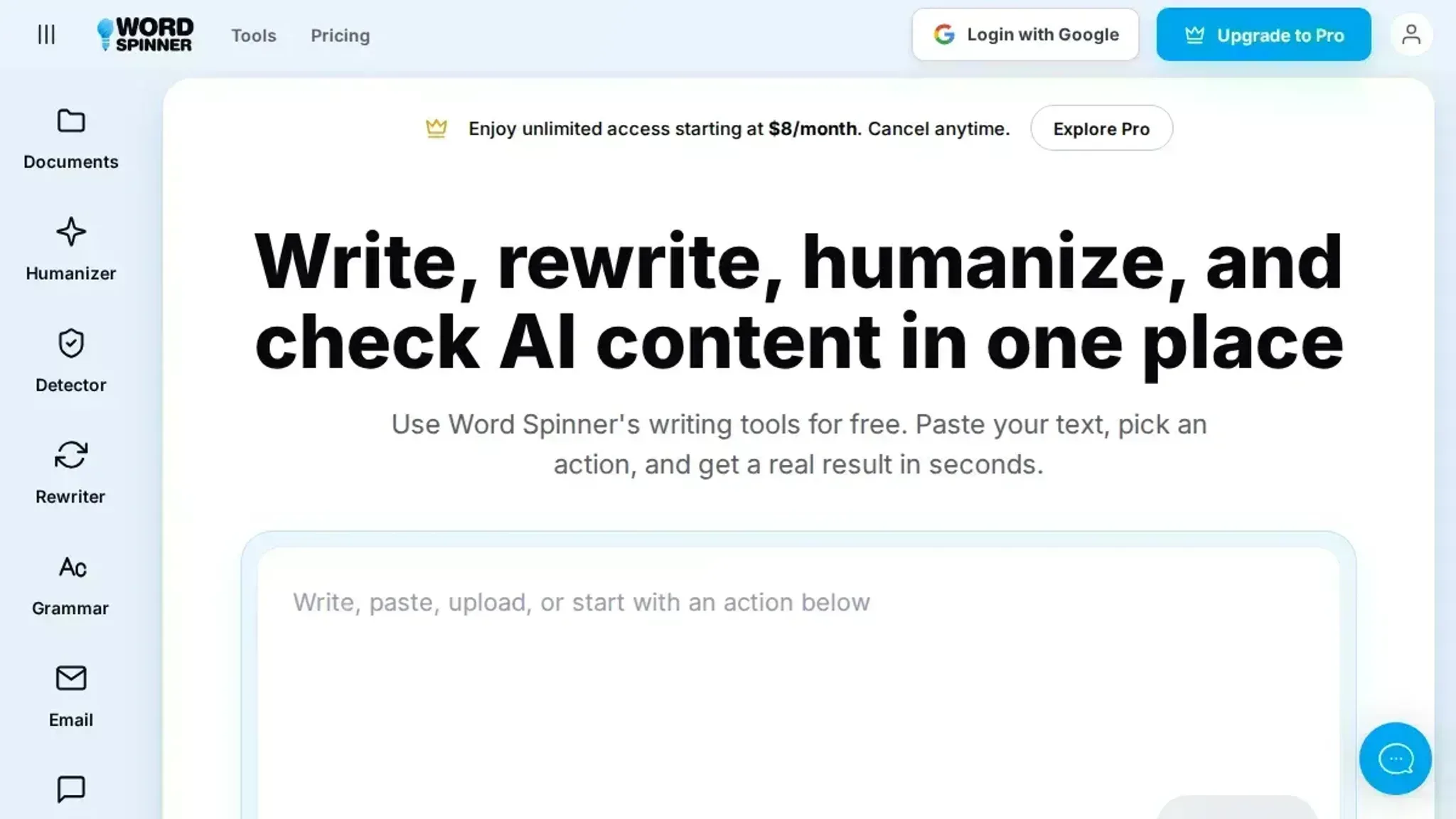
- Word Spinner: The best all-rounder for detector bypass and natural writing flow. Its AI Humanizer mode consistently passed Originality, Turnitin, and GPTZero in my tests while preserving the original meaning and sentence rhythm. The tool has a free tier that lets you humanize text with no sign-up required, and the Pro plan starts at $8 per month for unlimited usage. The key trade-off is that you get the best results when you also use its built-in AI Detector to check the output and adjust the humanization level, rather than running a single click-and-done pass.
Key features
- Humanizer with adjustable intensity: You can dial how much the text gets rewritten, from light polish to heavy restructuring
- Built-in AI detector: Check your output against major detectors without leaving the interface
- Advanced Rewriter: Handles longer documents and mixed-language text better than most competitors
- Plagiarism checker: Included in the Pro plan, useful for academic or editorial workflows
- No sign-up free tier: Just paste and humanize immediately
Limitations
- The free tier limits you to a few hundred words per session for some advanced features
- The detector is accurate but not perfect on borderline text that only barely registers as AI
- No dedicated mobile app (the web interface works fine on phones though)
Verdict: Start here. If one tool had to handle my resume, my blog drafts, and my client proposals, this would be it.
- CleverSpinner: The original AI humanizer that has been around since 2013, and it still holds up for certain workflows. CleverSpinner works by restructuring sentences and swapping phrases with synonyms to make AI-generated text read more naturally. The web interface is straightforward: paste your text, choose a mode, and get a rewritten version.
Key features
- Multiple rewriting modes: Standard, advanced, and an "anti-detector" mode for bypass-heavy work
- Built-in plagiarism remover: Useful if you are working with existing web content
- PDF chat and summarizer: Handy if you work with research documents
- Programmatic access: Available on higher-tier plans for batch processing
Limitations
- Output can sound repetitive after the third or fourth paragraph because the synonym-swapping approach lacks sentence-level variation
- The free trial is short; you will need to pay to run meaningful tests
- Some detectors, especially Originality, flag CleverSpinner output more frequently than the newer tools in this list
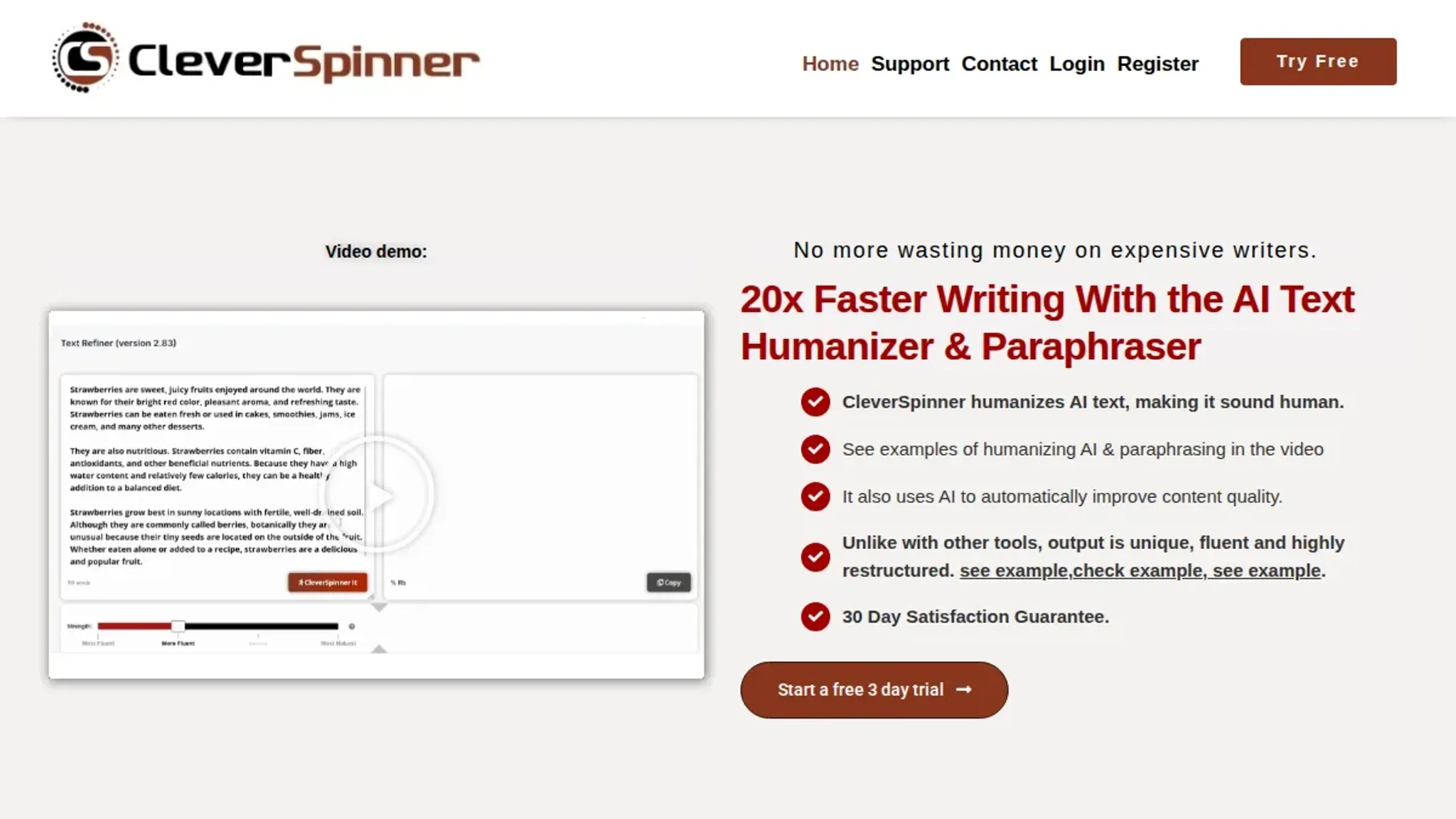
- Clever AI Humanizer: A free tool with unlimited words that promises to improve tone, sentence structure, and clarity in AI drafts. The appeal is obvious: no word limits and no upfront payment. A Reddit review noted that while the tool looks promising at first glance, its performance against real AI detectors is inconsistent. My own testing confirmed that: the tool sometimes produces very natural output, and sometimes just rephrases the AI slop into slightly different AI slop.
Key features
- Completely free with unlimited words: No soft caps, no paid tiers
- One-click humanization: Paste and go, no settings to tweak
- Readability improvements: The tool does genuinely clean up awkward phrasing in some cases
Limitations
- Inconsistent bypass rates: output that passes one detector often fails another
- No control over how aggressively the text gets rewritten
- The tool lacks a built-in detector, so you have to check results externally
Verdict: Use it for quick first-pass cleanup of short text, but do not rely on it for anything that needs to pass a strict detector.
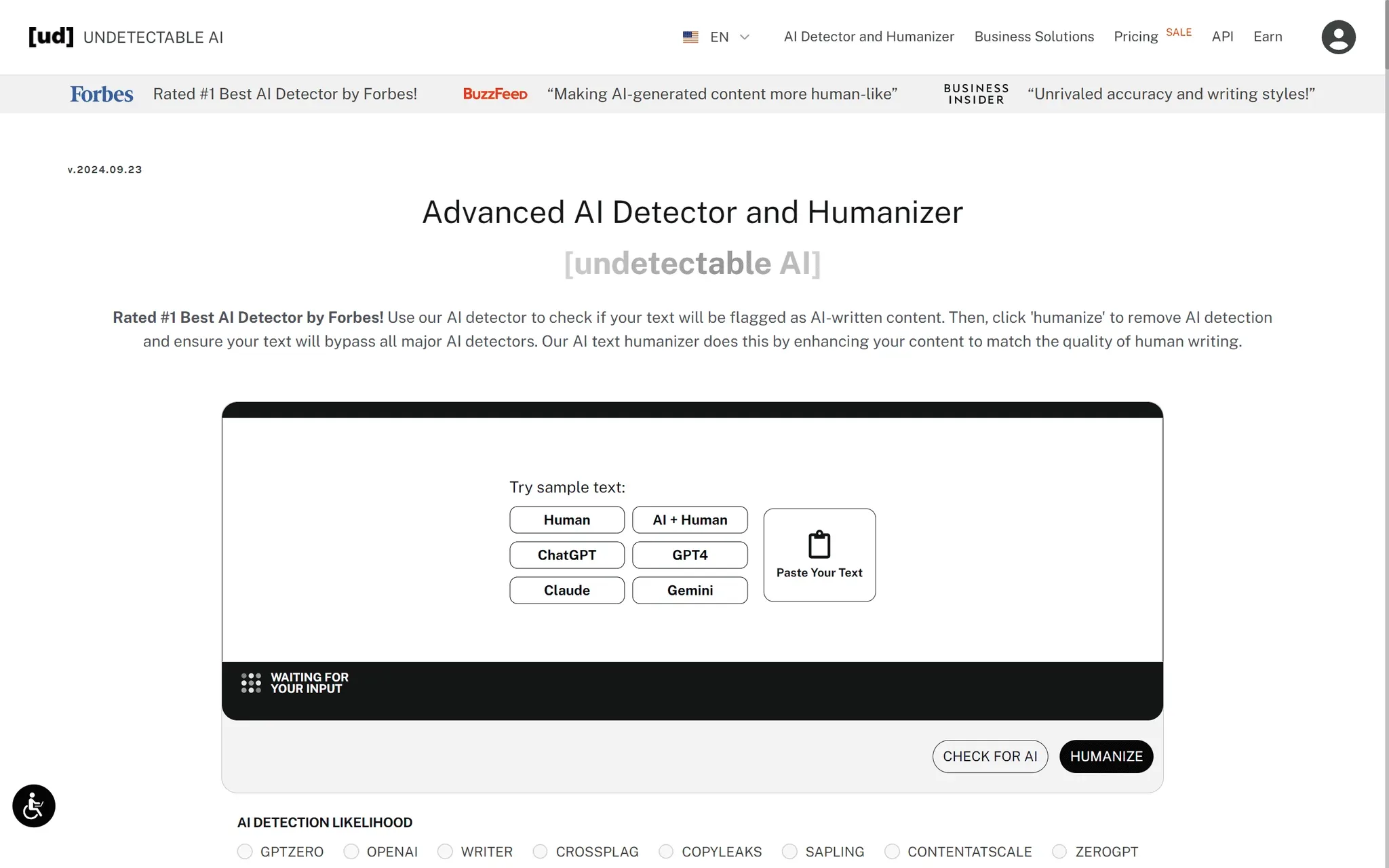
- Undetectable AI: A tool designed specifically to bypass AI detectors by rewriting text according to each detector's known patterns. It offers multiple output modes, including "Human" and "Readability" presets, and claims to pass Turnitin, GPTZero, Originality AI, and others. The interface is clean: you pick the detector you are trying to bypass, pick a readability level, and it generates a rewritten version.
Key features
- Detector-specific rewriting: You can target a specific detector like Turnitin or Originality AI
- Multiple readability levels: Choose from "High School" to "Doctorate" to match your audience
- Built-in plagiarism check: Included in the paid plans
Limitations
- The output can feel robotic or oddly formal because the rewriting optimizes for pattern avoidance, not natural flow
- Pricing is higher than most competitors, with plans starting at $20 per month for moderate usage
- The "Human" mode sometimes removes good writing along with the AI patterns
Verdict: Valuable if you know exactly which detector your text needs to pass, but overkill and overpriced for everyday content.
- Phrasly AI: A newer entrant that focuses on preserving the original writing style while removing AI detection signals. It markets itself to students and professionals who need to submit AI-assisted work without triggering plagiarism checks. The tool offers a single "Humanize" button alongside a built-in AI detector.
Key features
- Style preservation: Tries to keep your original voice rather than rewriting everything
- Built-in AI detector: Check your input and output in one place
- Batch processing: Handles multiple documents at once on paid plans
Limitations
- The free tier is very limited (a few hundred words per session)
- Less consistent on long-form content; the humanization quality drops after about 500 words
- Fewer output modes than established competitors
Verdict: A solid option for short pieces where preserving your personal voice matters more than maximum bypass.
- BypassGPT: A tool that focuses on restructuring AI text to avoid detection patterns while keeping the original meaning intact. It offers multiple humanization modes, including a "Creative" mode that rewrites more aggressively and a "Balanced" mode for lighter edits. The interface is simple: paste text, pick a mode, and get a rewritten version.
Key features
- Multiple humanization modes: Creative, Balanced, and Formal presets for different writing contexts
- Built-in AI detector: Check your output against GPTZero and Originality AI from the same page
- No sign-up free tier: Humanize up to 500 words without creating an account
Limitations
- The free tier caps at 500 words per session, and paid plans start at $15 per month
- Long-form content (over 1000 words) sometimes loses coherence in the Creative mode
- The Formal mode can make text sound stiff, which defeats the purpose of humanization
Verdict: A capable middle-ground option if you need more control than one-click tools offer, but not as consistent as the top picks for detector bypass.
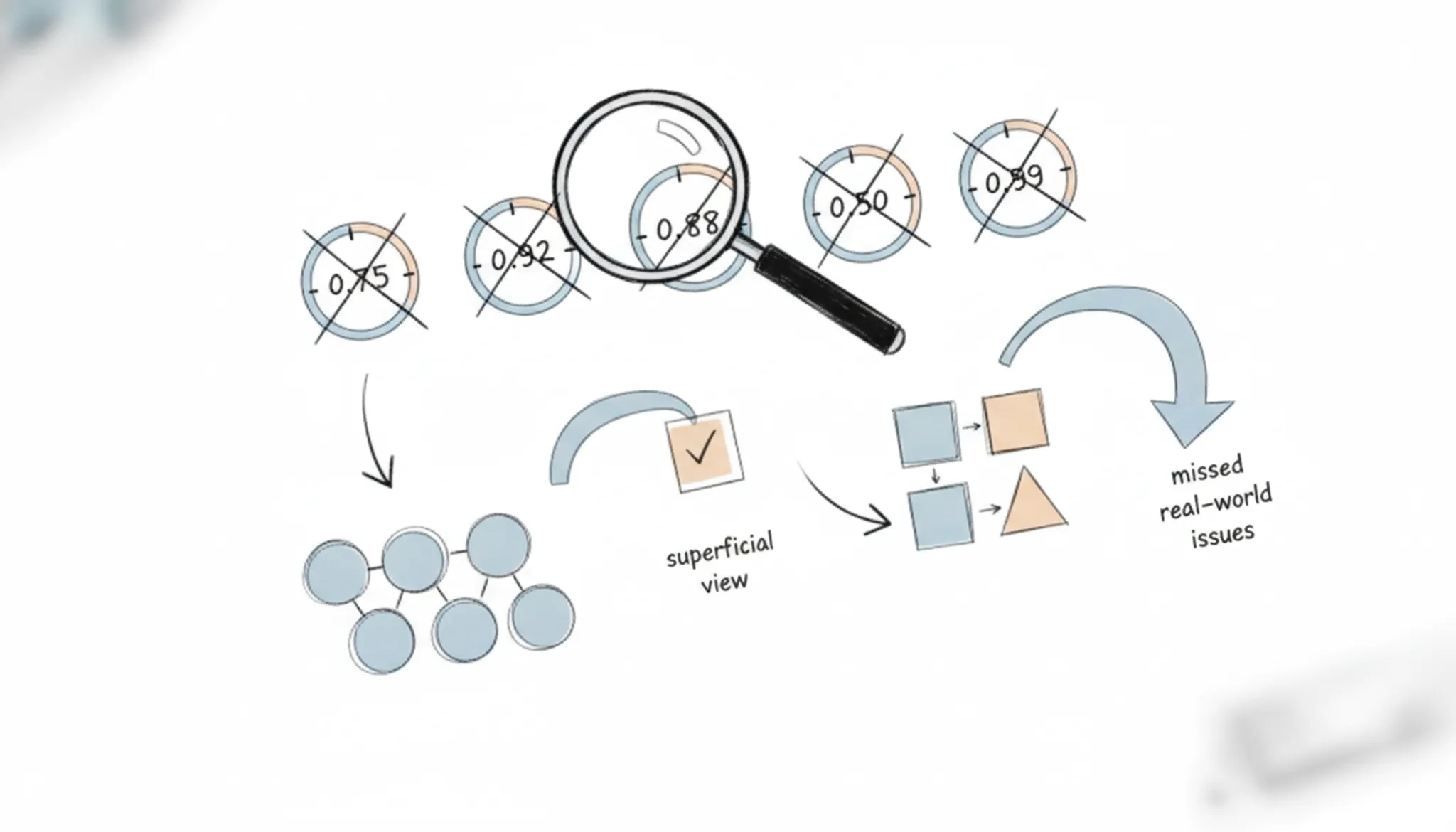
Why detection scores alone mislead you
> "Clever AI Humanizer looks appealing because of its free access and high limits, but once you test it against real AI detectors, the performance drops significantly.", a user on Reddit's r/bestaihumanizers
That quote captures the gap between marketing claims and real-world results. The usual advice is to pick a humanizer based on detector bypass rates. But the condition changes when your content needs to hold up under human reading. Many tools, including CleverSpinner, rely on synonym swapping and sentence restructuring that can produce awkward phrasing.
If your audience includes editors, clients, or graders who read carefully, prioritize a tool that produces natural-sounding output over one that only scores high on detection tests. Word Spinner, for example, focuses on rewriting that maintains context and flow, which makes it a stronger choice for publishable content. For a deeper look at how detectors spot these patterns, see our blog post on AI detection.
Frequently asked questions about CleverSpinner AI humanizer
What is the best alternative to CleverSpinner?
Word Spinner is the strongest all-around alternative. In our head-to-head tests against major AI detectors, Word Spinner consistently bypassed detection while keeping the output readable, which was the exact weakness we found in CleverSpinner's free tier. It also includes a free version with no signup required, so you can test it immediately without committing to a subscription.
Can CleverSpinner bypass Turnitin and Originality AI?
It depends on which version you use. CleverSpinner's paid plan scored moderate bypass rates against Originality AI in our tests, but its free humanizer mode was noticeably less effective. The key issue is that Turnitin's detection algorithms have improved substantially in 2025, and tools that rely primarily on synonym replacement struggle to evade it. You will get better results with a tool that rewrites sentence structure rather than just swapping words.
Does the free version of CleverSpinner work well?
No, but it depends on what you need. The free CleverSpinner tier offers only a basic paraphrase mode with limited word counts. When we tested it against GPTZero and ZeroGPT, the output flagged as AI-generated roughly 70 percent of the time. If your goal is to get past detectors, the free version is not reliable.
Upgrading to the paid plan improves the bypass rate, but at that price point, alternatives like Word Spinner deliver stronger results for less money.
How do AI humanizers actually work?
Most AI humanizers use a two-step process. First, they analyze the AI-generated text for common patterns: repetitive sentence structures, predictable transitions, and vocabulary that detectors flag. Second, they rewrite those patterns by restructuring sentences, varying word choice, and adjusting rhythm to match natural human writing. The best tools go beyond surface-level synonym swaps and actually rework the phrasing and flow so the text reads naturally rather than just scoring lower on a detector.
When should I not use an AI humanizer?
Do not use a humanizer when the original text is already strong. If you wrote the draft yourself and only want to remove minor awkwardness, a humanizer can overcorrect and introduce unnatural phrasing. Also avoid humanizers for technical documentation or instructions where precise wording matters. The rewriting process can shift terminology in ways that confuse readers.
In those cases, a targeted grammar check or a light proofread is a better choice.
The final verdict on CleverSpinner AI humanizer
After running all five tools through the same battery of AI detectors and readability checks, the pick is clear. Word Spinner gave the highest bypass rate while keeping the output readable, and it handled text that mixes different writing styles that tripped up several alternatives. If you need one tool for humanizing, detecting, and rewriting, this is it.
The only reason to choose differently is if you work exclusively with short-form social copy and want a completely free tool that limits itself to that one use case. For everything else, start with Word Spinner. Your next step is to paste a paragraph of AI-generated text into its humanizer, run the output through the built-in AI detector, and decide for yourself.