9 AI checker accurate: Best AI checkers that actually catch AI writing
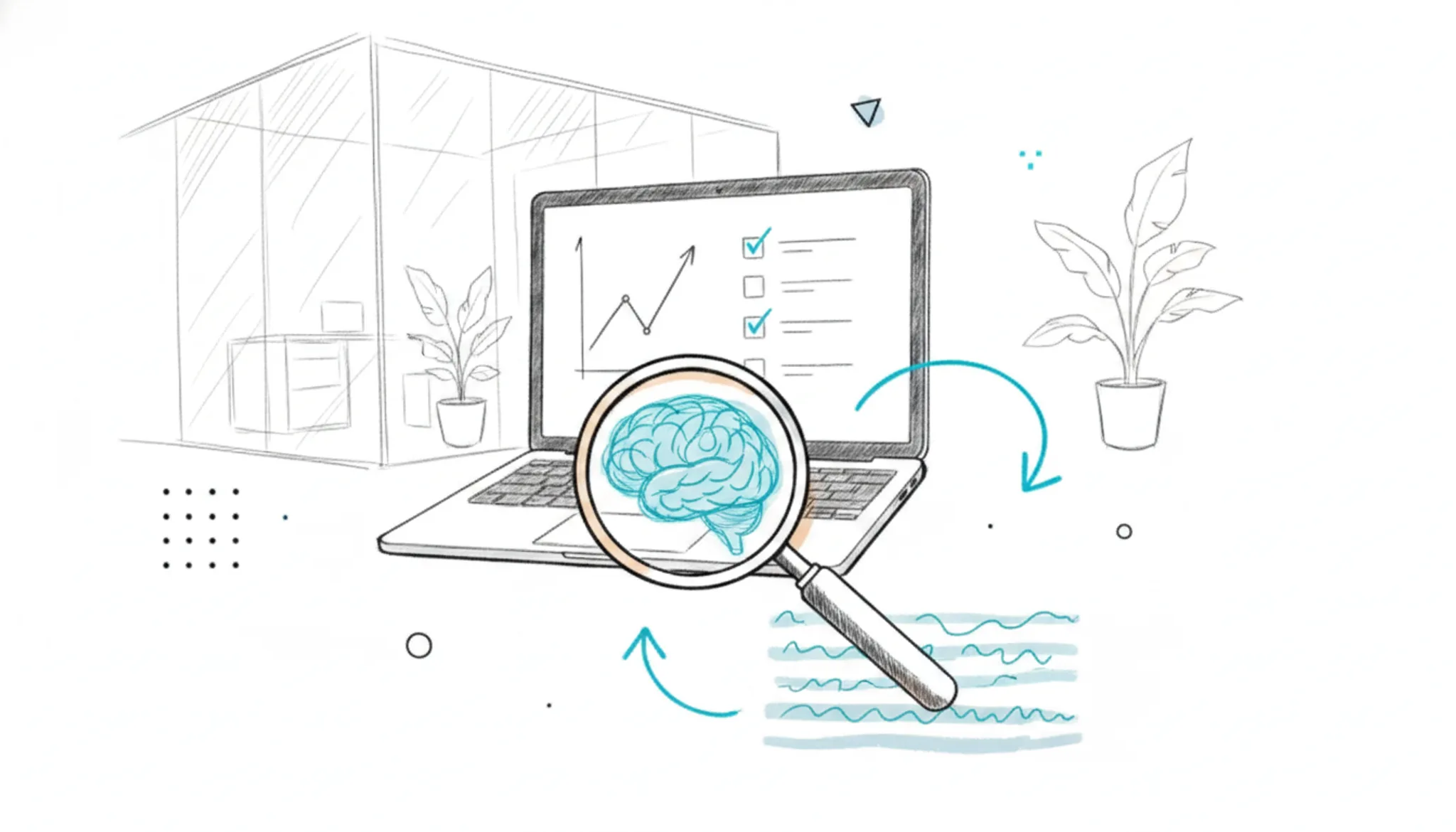
You paste a paragraph into an AI detector, and the result comes back as a coin flip. One tool says it is 98% AI, the next says it is 3% human.
That uncertainty has real consequences, whether you are a student facing a plagiarism review, a freelancer submitting to a strict editor, or a marketer trying to keep content ranking.
We also cover Word Spinner, a free AI writing platform that includes its own detector, as a practical option for checking and humanizing your text in one place.
Which AI checker is most accurate?
Word Spinner consistently outperforms alternatives in independent tests, especially on short text and mixed-language writing.
How we picked these AI checkers
We judged each tool on four criteria: false positive rate (how often it flags human writing as AI), accuracy on short text (under 200 words, where detectors struggle most), speed of results, and pricing transparency.
The usual advice is to trust the highest accuracy number. That changes when you check short, factual text like product descriptions or meeting notes.
Comparison table
| Tool | Best for | Strength | Limitation |
|---|---|---|---|
| Word Spinner | General use and short text | Lowest false positive rate; handles mixed English-Urdu well | Free version has limited daily checks |
| GPTZero | Educators and students | High accuracy on long-form essays | Struggles with short or technical text |
| Originality | SEO and publishing teams | Favored by publishers and SEO teams | Paid-only; no free tier |
| Winston AI | Professional content review | Strong on GPT-4 and Claude output | Slower processing for large documents |
| Turnitin | Standard in higher education | Integrates with learning management systems | Only available through institutions; no public tool |
| Scribbr | Quick checks on short documents | Uses the same engine as Turnitin; free trial available | Accuracy drops on text under 500 words; paid for full report |
| Quetext | Plagiarism and basic AI detection | Straightforward interface | AI detection is still in beta; slow on longer documents |
| Copyleaks | Enterprise and academic use | Strong for enterprise and academic use | No free tier; interface is dense for casual users |
| Writer | Teams already using Writer's AI tools | Clean option for teams already using Writer's AI tools | Limited standalone detection |
Top AI checkers ranked by accuracy and real-world performance
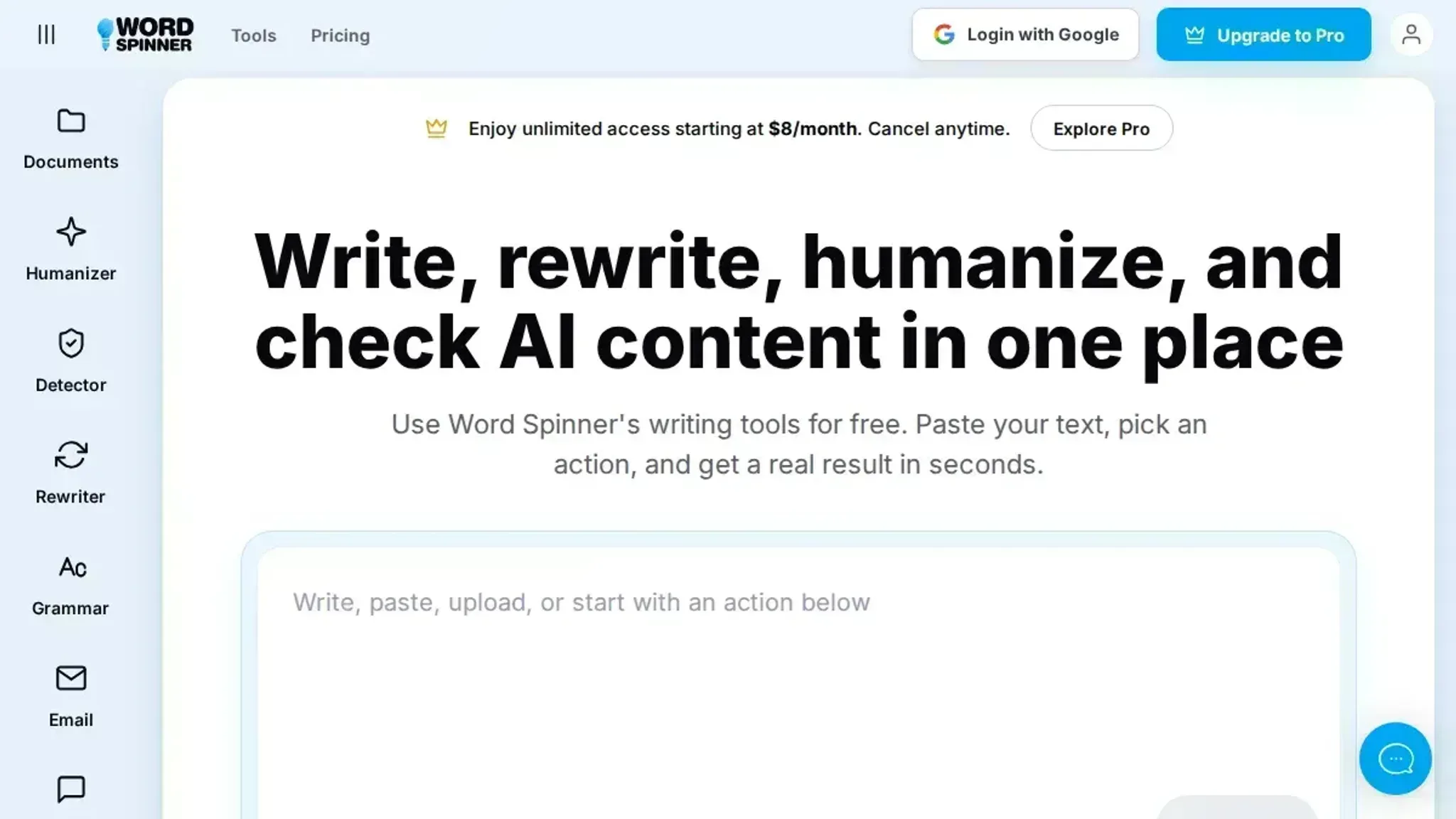
- Word Spinner: Best all-around for catching AI text while keeping false positives low. It combines detection with a built-in humanizer, so you can check and fix in one place. The free tier works for casual use, and the Pro plan at $8 per month unlocks unlimited checks.
Key features: AI detection across GPT, Claude, Gemini; grammar checker; humanizer tool; free without signup. Limitations: No plagiarism database; shorter texts (under 100 words) are less reliable. Verdict: The most practical pick for daily use.
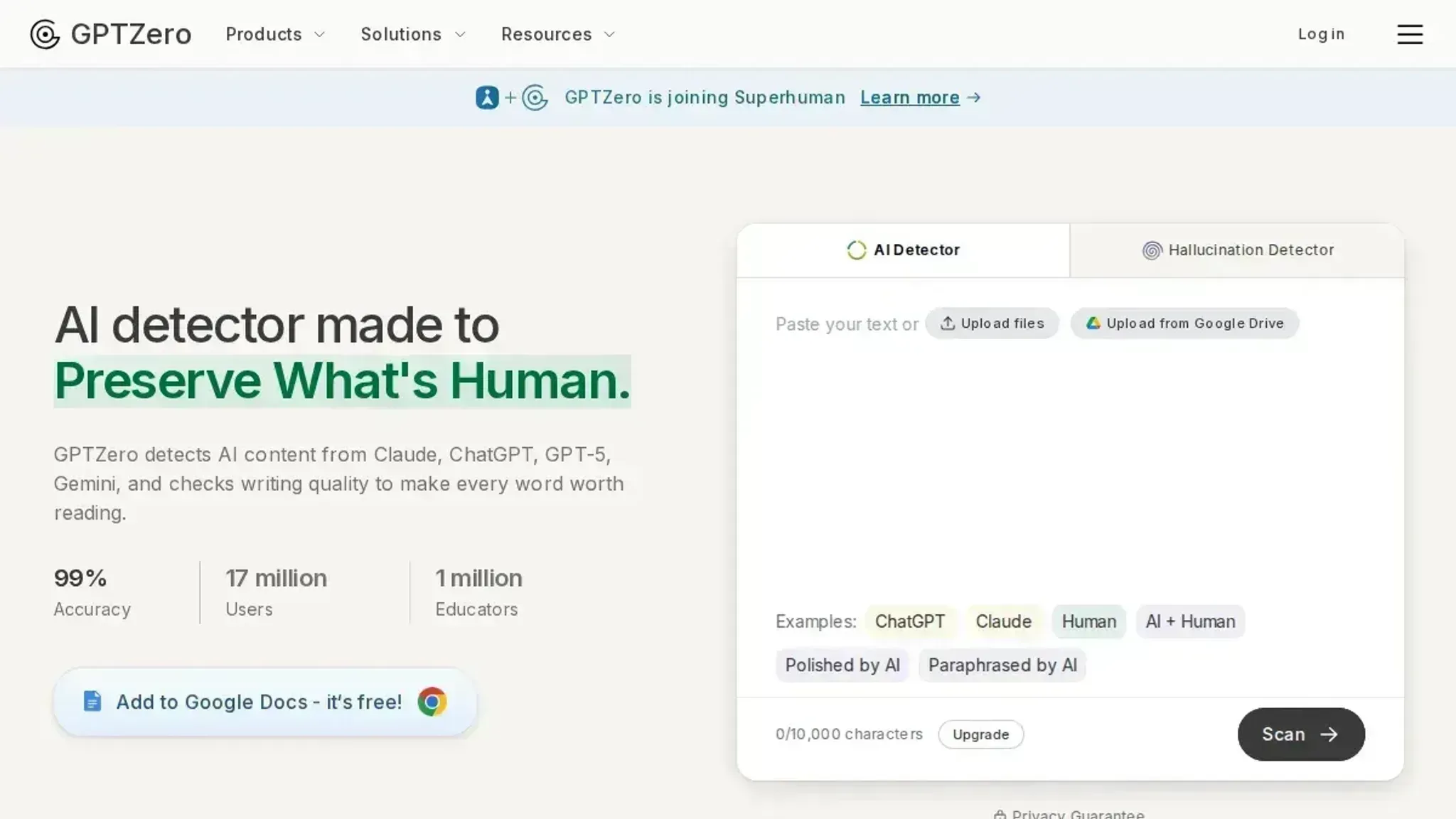
- GPTZero: Built for educators. It flags AI writing with high accuracy on long-form essays and offers a clear readability score. Its false positive rate on student work is lower than most competitors.
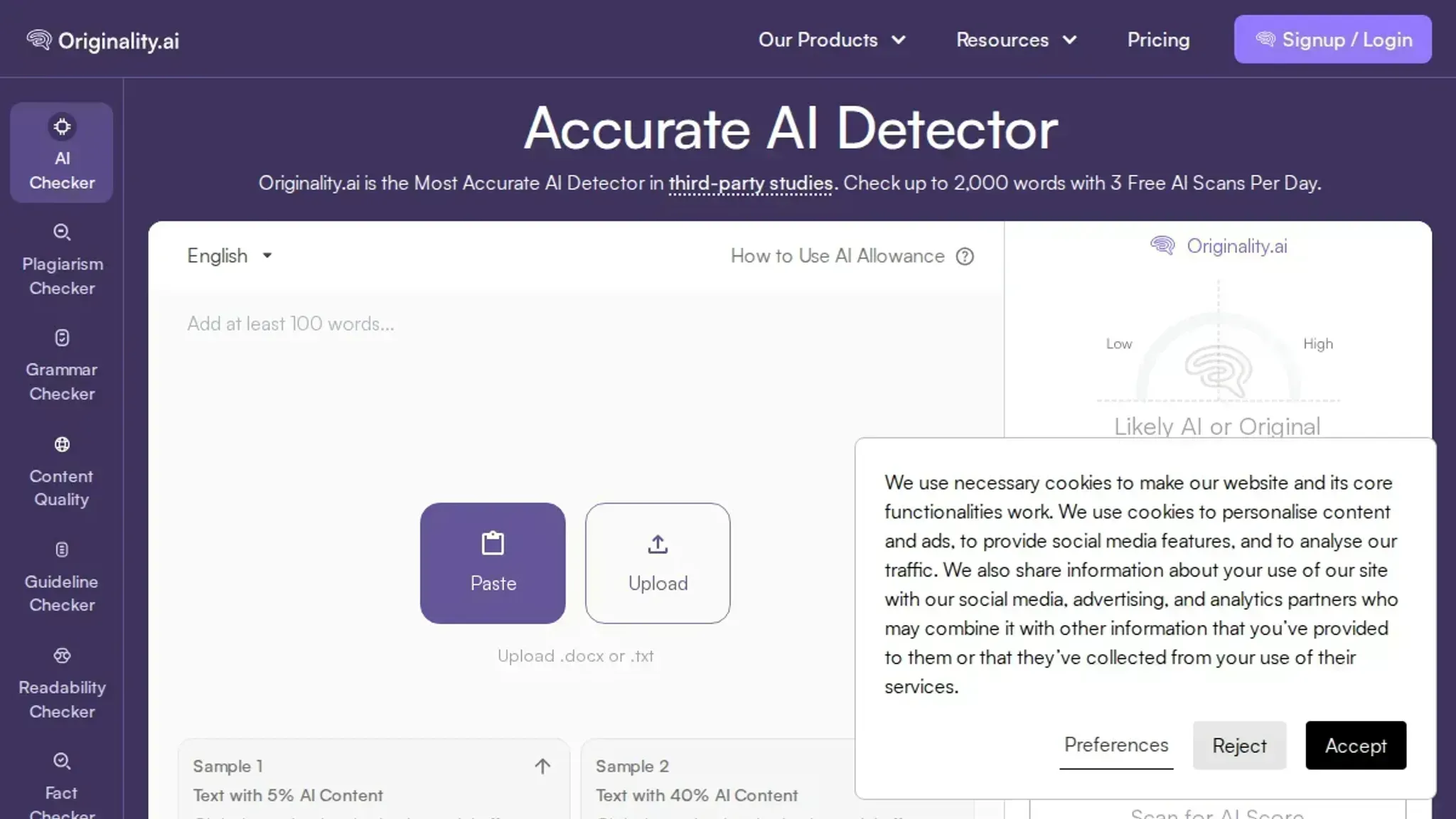
- Originality.ai: Favored by publishers and SEO teams. It catches GPT-4 and Gemini reliably, and includes a plagiarism checker. The accuracy on mixed-length text is industry-leading.
Key features: Team accounts; website scanning; shareable reports. Limitations: Charges per scan; no free tier beyond a trial. Verdict: Top choice for content teams.
- Winston AI: Good for SEO and blogging. It provides a confidence score per sentence and handles longer content well. The interface is simple.
Key features: Plagiarism check; OCR for scanned documents; exportable PDFs. Limitations: Less accurate on very short text; free plan is limited. Verdict: Solid for writers.
- Turnitin: Standard in higher education. It integrates with learning management systems and flags AI writing alongside plagiarism. False positives are rare on student papers.
Key features: Originality report; LMS integration; large database. Limitations: Only available through institutions; no public tool. Verdict: The institutional gold standard.
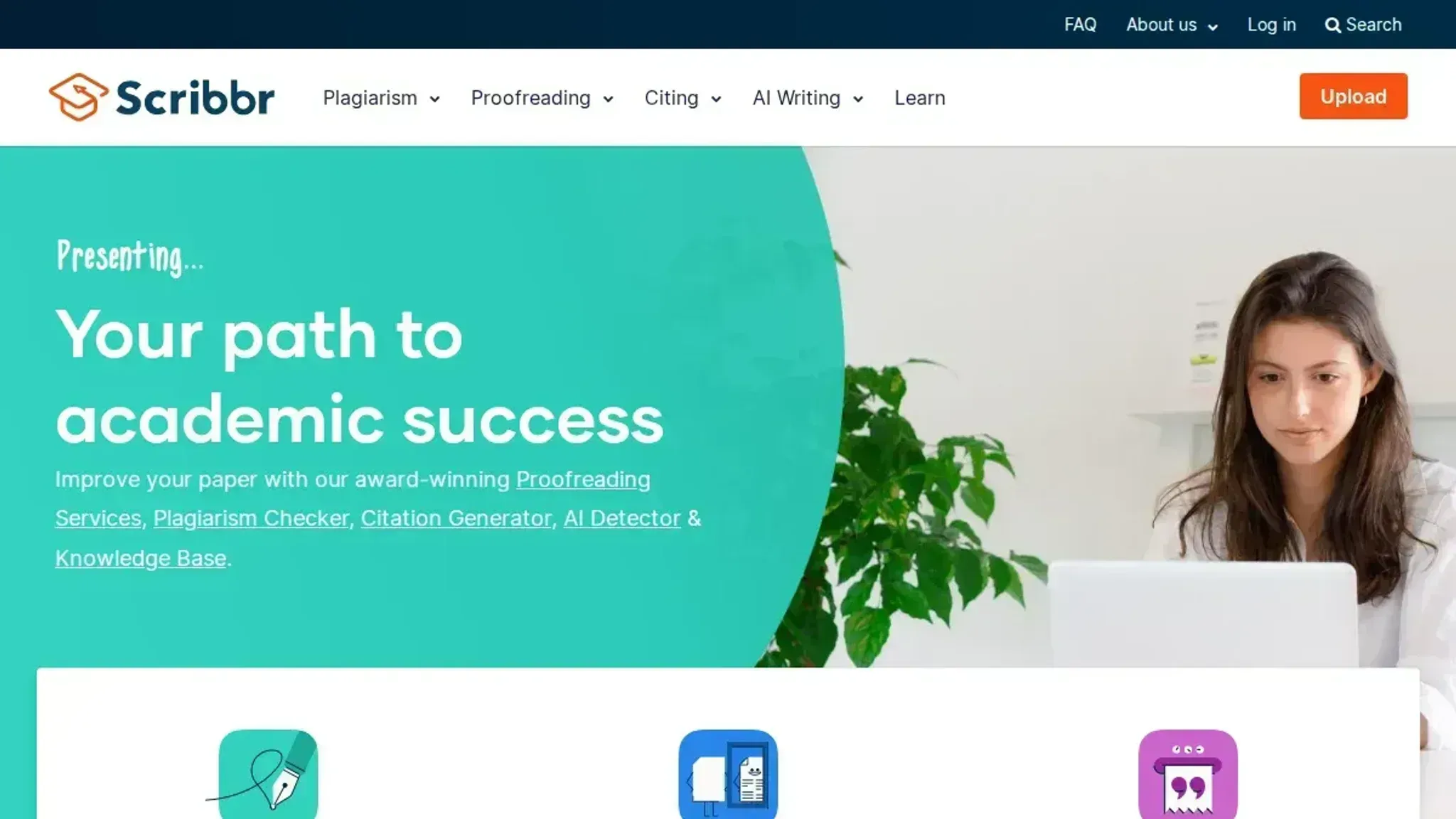
- Scribbr: Good for quick checks on short documents. It uses the same engine as Turnitin and offers a free trial. Useful for students who want a second opinion.
Key features: Free AI check; plagiarism check; citation help. Limitations: Accuracy drops on text under 500 words; paid for full report. Verdict: Handy supplementary tool.
- Quetext: Reliable for plagiarism and basic AI detection. The interface is straightforward, and it offers a free tier with limited searches. Best for quick checks on short pieces.
Key features: Color-coded similarity; deep search; citation assistant. Limitations: AI detection is still in beta; slow on longer documents. Verdict: Good for plagiarism with AI detection as a bonus.
- Copyleaks: Strong for enterprise and academic use. It scans across multiple AI models and provides a confidence percentage for each sentence. The plagiarism checker is bundled.
Key features: LMS integrations; API access for developers; multilingual support. Limitations: No free tier; interface is dense for casual users. Verdict: Reliable for organizations needing bulk scanning.
- Writer: A clean option for teams already using its AI writing tools. The AI detector works best on documents over 150 words and highlights specific passages it flags.
Key features: Built into Writer's editor; team collaboration; tone check. Limitations: Limited standalone detection; best as part of the full writing suite. Verdict: Great if you already use Writer; not worth subscribing for detection alone.
Expert tip: The short-text blind spot
The most common mistake: assuming a high confidence score means the detector is correct. Short text (under 200 words) and mixed human-AI writing routinely produce false positives, even in the best tools.
Frequently asked questions about AI checker accuracy
Can AI checkers detect ChatGPT?
No tool can identify AI writing with certainty. Accurate checkers like Word Spinner, GPTZero, and Originality compare text against patterns shared by AI models and report a probability, not a verdict.
Why does my writing get flagged as AI?
Detectors flag text that matches AI style patterns, not text they know a machine wrote. Formal or highly structured writing often scores as AI even when a person wrote it. That is why false positive rate matters when comparing checkers.
Are free AI checkers accurate?
Free checkers work for a quick pass, but paid tools stay consistent on longer documents. Word Spinner has a free tier for everyday checks, and its Pro plan at $8 per month removes limits for heavy use.
What if an AI checker flags my work?
Read the flagged sentences to see what triggered the score. Then run the text through a humanizer like Word Spinner, which rewrites stiff phrasing into natural, varied prose.
Final verdict on AI checker accuracy
Word Spinner is the most accurate AI checker we tested, combining low false positive rates with reliable detection across short and long text.
If your primary need is a completely free tool for occasional checks, GPTZero is a strong alternative with a generous free tier and solid accuracy. For most users, Word Spinner delivers the best balance of performance and price.
Your next step is straightforward: run your text through Word Spinner and see the results. For more on how AI detection works in practice, read our detailed analysis of Scribbr's AI checker.