The complete guide to AI checker accuracy
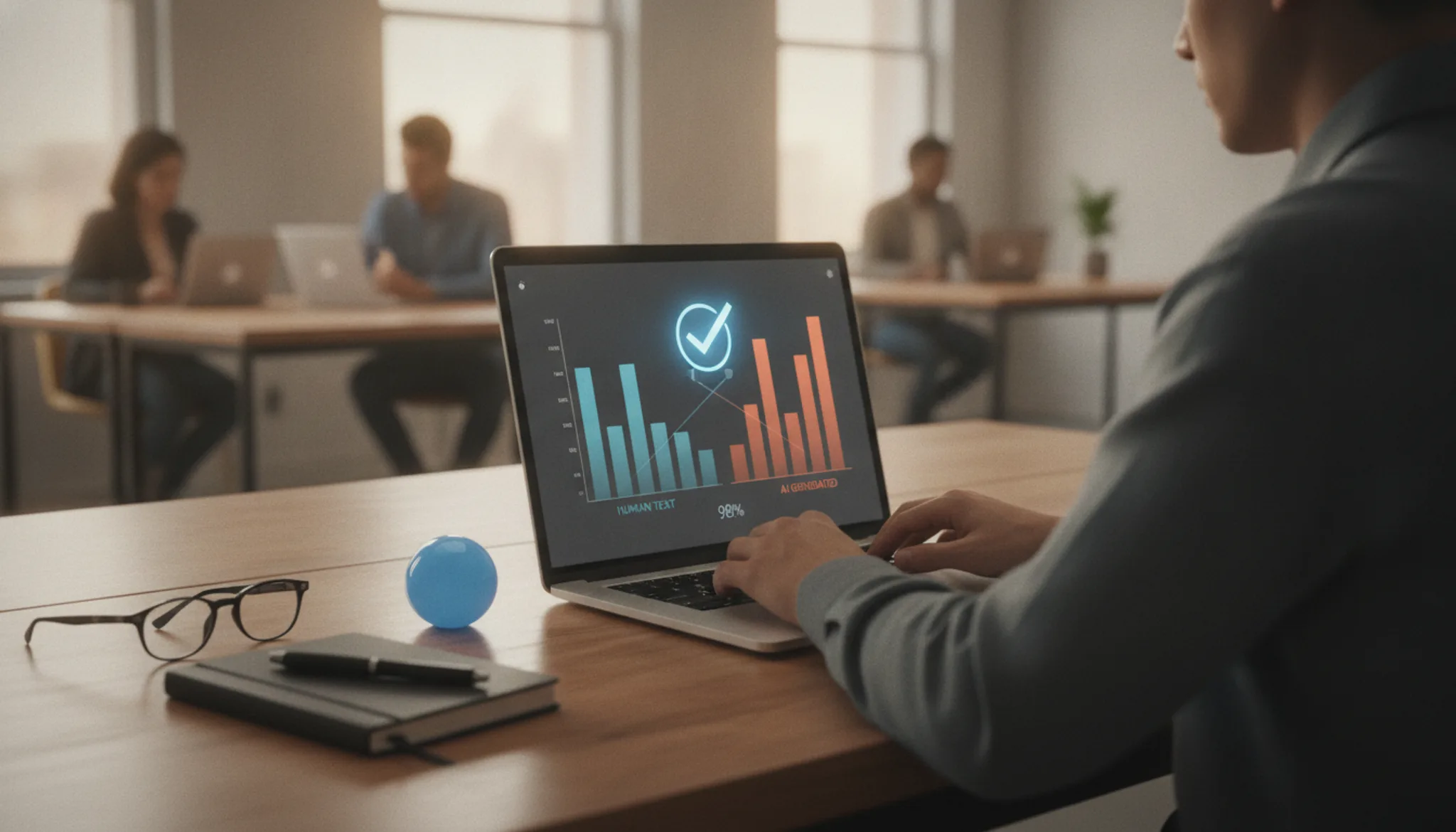
You paste a paragraph into an AI detector, it lights up red, and you have no idea whether to trust it. Maybe you are a student checking your own draft before submitting, or a hiring manager screening a cover letter, and the tool says "100% AI" on something you wrote yourself. That mismatch is the real problem with AI checker accuracy: the tools are probabilistic, not definitive, and most people do not know how to read their results.
Key takeaways
- Treat every AI checker result as a probability, not a verdict. No detector is perfectly accurate, and short or heavily edited text raises the error rate.
- Check the false positive rate before trusting a red flag. Detectors like Scribbr flag human writing as AI more often than most people expect.
- Use multiple detectors on the same text. When results disagree, the middle ground is usually the truth.
- Keep original drafts with timestamps. That is your only reliable defense when a checker mislabels your work.
How accurate are AI checkers in 2026?
The most accurate approach is to treat any AI checker result as a probability, not a verdict, and cross-check it against a second detector before acting on it. No single tool is perfectly accurate, because every detector works by spotting statistical patterns in writing, and those patterns shift as new AI models are released. The real-world tests show accuracy varies widely by content type, length, and the specific AI model that generated the text.
Expect false positives on short, factual, or heavily edited human writing, and verify borderline results manually. A 200-word product description written by a human with uniform sentence structure will trip most detectors, while a 2,000-word AI essay with varied phrasing can slip through.
What does an AI checker actually measure?
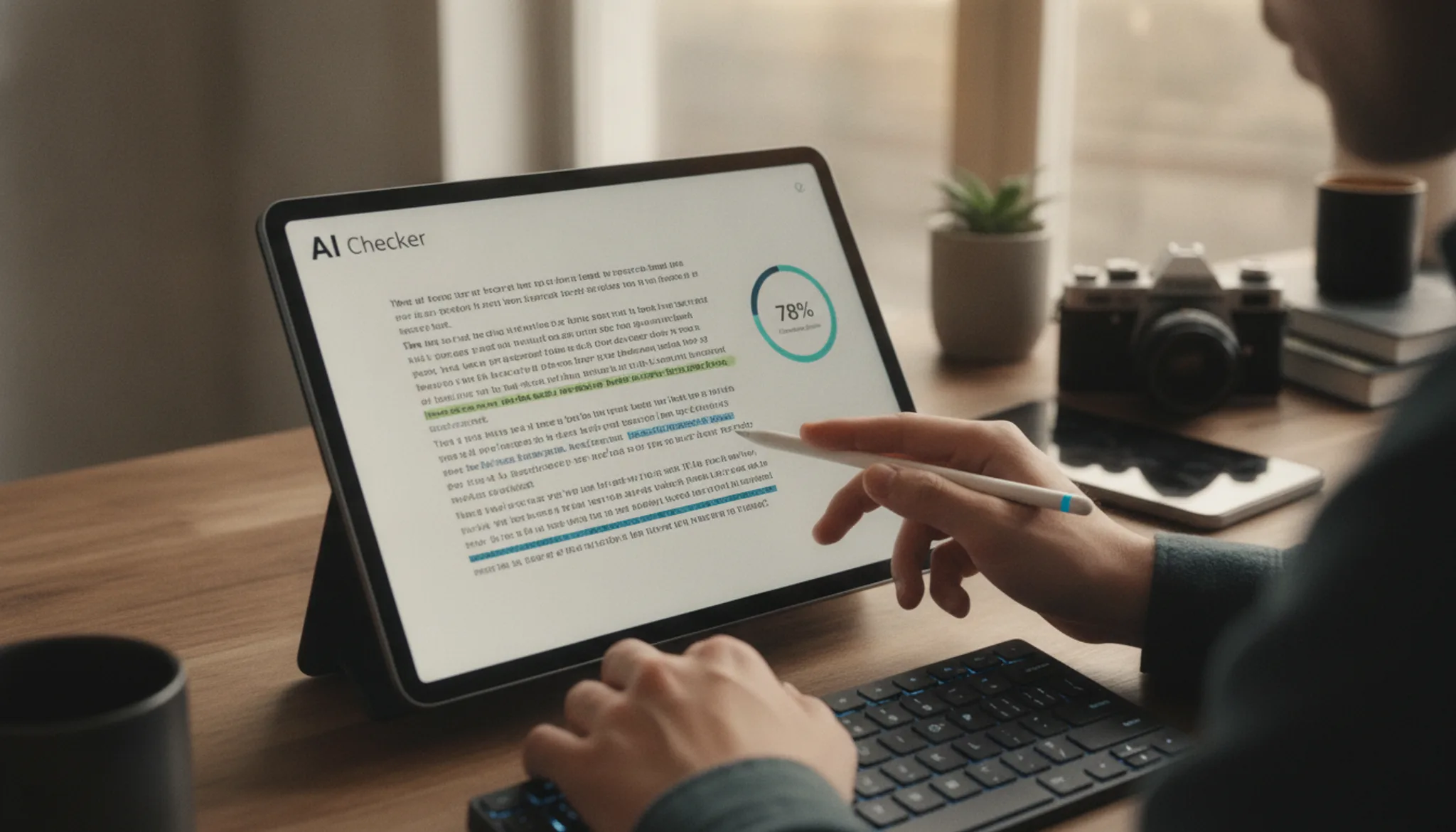
An AI checker measures how predictable your text is. Detectors like GPTZero analyze patterns in word choice, sentence rhythm, and repetition, then compare them against what ChatGPT, Claude, and other language models typically produce. The output is a probability score, not a definitive label.
That distinction matters. A score of 80% AI does not mean the text was written by a machine. It means the detector found patterns that resemble machine writing. Human text with uniform sentence lengths, formal vocabulary, or heavy repetition can trigger the same signals.
The accuracy of that measurement depends on the detector's training data and the text you feed it. Short paragraphs, technical jargon, and non-native phrasing all skew results. Independent tests show detection rates vary widely across tools, which is why cross-checking with a second detector is the only reliable workflow.

How do AI checkers decide what counts as AI text?
An AI checker compares your writing against the statistical patterns of machine-generated text, then returns a probability score. The key is that the score reflects predictability, not authorship.
Unusual word choices and irregular sentence lengths look human.
The accuracy of that judgment depends on the detector's training data. Tools like Scribbr and GPTZero train on large corpora of both human and AI text, then calibrate a threshold. Cross that threshold and the text is flagged. Below it, you get a human verdict.
This is why the same paragraph can score differently across detectors. Each one uses a different model and threshold, so results vary. A practical workflow is to run your text through two detectors and compare. If they disagree, read the flagged sentences yourself and judge whether the phrasing sounds mechanical.
How do you test an AI checker before you trust it?
Run every detector through the same three-step check before you rely on its verdict.
- Feed it a control sample: Paste a paragraph you wrote yourself, then a paragraph generated by ChatGPT. A detector with usable accuracy should flag the AI text and leave your own writing alone. If it calls both human, or both AI, you know its threshold is off.
- Test the edge cases: Run text that mixes quoted sources, technical jargon, or your own edits on top of AI output. Mixed text is where most detectors fail, so this shows you the real-world failure rate, not the marketing number.
- Cross-check with a second tool: Compare the result against a different detector, like Scribbr or GPTZero. When two tools disagree, treat the text as uncertain rather than cleared. For a faster workflow, Word Spinner's AI humanizer can rewrite flagged passages so they read naturally, then you re-test the result.

What features make an AI checker trustworthy?
A trustworthy AI checker gives you more than a single red or green verdict. The features that matter most are confidence scores, sentence-level highlighting, and cross-detector consistency, because each one lets you judge the result instead of accepting it blindly.
Confidence scores tell you how strongly the tool believes its own answer. A 98% "AI" reading means something different from a 54% one, and the best checkers show that distinction clearly.
Sentence-level highlighting shows you which passages triggered the flag. This matters because AI text is rarely uniform, and a mixed document often contains only a few machine-written sentences.
Cross-detector consistency is your reality check. Run the same text through two checkers, and if both agree, the verdict is far more reliable than either one alone. For a quick second opinion, a grammar checker can also reveal the mechanical patterns that detectors key on.

Where AI checker accuracy matters most in real work
AI checker accuracy matters most in three everyday situations: submitting academic work, publishing content that must rank in search, and applying for jobs. In each case, a false positive carries a real penalty, so the way you use the checker changes.
For student submissions, run your draft through a detector before you hand it in, then keep the flagged sentences and rewrite them in your own voice. For published articles, check every piece before it goes live, because a false positive can damage reader trust.
The practical rule is simple: use the checker as a second opinion, not a final judge. Cross-check any borderline result against a second detector, and keep your own drafts with edit history as proof of authorship. That combination catches real problems without letting a probability score override your judgment.
How do you improve AI checker accuracy in your own writing?
You improve AI checker accuracy by making your writing less predictable, since detectors score text on statistical predictability. The practical workflow is simple: run your draft through a checker, then revise the flagged sentences until the score drops.
Rewrite flagged sentences in your own voice. Detectors penalize uniform sentence length, perfect grammar, and generic transitions. Break the rhythm with a short sentence, add a concrete detail only you would know, or replace a formal phrase with your natural wording.
Cross-check with a second detector. No single checker is reliable enough to trust alone. Run the same text through two tools and compare verdicts before you change anything.
Keep receipts for your own work. Save drafts, outlines, and notes that show your writing process. If a false positive ever matters, your version history is the evidence that settles it.
AI checker accuracy compared side by side
The four main options differ on three criteria: what they detect, where they work best, and what they miss. Pick based on your stakes, not on marketing claims.
| Option | Best for | Key trade-off |
|---|---|---|
| Scribbr | Academic writing with citations | Flags AI even in human text with heavy editing |
| GPTZero | Educators reviewing student work | Over-flagging non-native English writing |
| Grammarly | Quick checks inside your writing workflow | Less transparent about scoring logic |
No single tool wins all three criteria. Cross-check any borderline result against a second detector before acting on it.
Verified August 2026
What are the real risks of trusting an AI checker?
The real risk is acting on a single verdict. A false positive flags your own writing as AI, while a false negative lets machine text pass as human. Both break trust with the person reading your work.
False positives hurt most in academic and job contexts, where you cannot easily prove you wrote something yourself. False negatives matter when you publish content meant to rank, since search engines increasingly filter AI-generated pages.
Watch for three warning signs in any checker: a binary "AI" or "human" label instead of a probability score, no way to see which sentences triggered the result, and zero transparency about the training data behind the verdict. A checker that cannot explain itself cannot be trusted with your reputation.

Frequently asked questions about AI checker accuracy
Can AI detectors be wrong?
Yes, AI detectors can be wrong, and they are wrong more often than most people expect. A detector returns a probability score, not a fact, so a high AI score on human writing is a real possibility, especially for factual, formal, or repetitive text.
Do AI checkers work on text written in other languages?
Most AI checkers are trained primarily on English text, so their accuracy drops noticeably on other languages. A text that scores clearly human in English can produce a false AI flag when translated into Spanish, French, or German, because the statistical patterns the detector learned simply do not transfer.
Why does my own writing get flagged as AI?
Your writing gets flagged as AI when it is statistically predictable, which is exactly what detectors measure. Short sentences, common transitions, formal vocabulary, and a consistent rhythm all push your text toward a higher AI score, even when you wrote every word yourself.
How many words do I need for an accurate AI check?
Most AI checkers need at least 150 to 300 words to produce a reliable score. Below that range, the detector has too little text to measure predictability, so short paragraphs, social media posts, or single email replies often return unstable results.
What is the difference between an AI checker and a plagiarism checker?
An AI checker measures statistical predictability to guess whether a machine wrote the text, while a plagiarism checker compares your text against published sources to find copied passages. The two tools answer different questions, and one result does not tell you anything about the other.
Final verdict on AI checker accuracy
Treat any AI checker result as a probability, not a verdict. The most reliable workflow is to run your text through Word Spinner first, then confirm the result with a second detector before acting on it. That cross-check catches the false positives that single tools miss.
Choose differently only if you need a detector for academic submission with strict institutional requirements. In that case, follow your school's approved tool instead of relying on a general-purpose checker.
Your next step is simple: test your own writing with Word Spinner today, and see where your typical text actually lands.