
The redditor's checklist for humanizing AI text without getting flagged
Your draft comes back flagged by an AI detector, and you cannot tell which sentences triggered it or whether a rewrite will hold up. The Reddit threads you find list a dozen tools but rarely explain what each one changed, so you are left guessing. That is where the trouble starts.
The stakes are not abstract. A flagged cover letter, a client deliverable, or a graded essay gets read differently once someone suspects a machine wrote it, and the fix has to survive a second look, not just a single scan.
You will come away able to spot the tells worth fixing by hand, tell when a humanizer is the wrong move, and test a rewrite before you send it. Word Spinner handles the rewriting and the AI detection check in one place, and it is the tool we would reach for first, though the checks work with whatever you already use.
What do Redditors actually recommend for humanizing AI text?
Start by rewriting the flagged sentences yourself, then run what is left through Word Spinner's humanize tool. That matches the direct answer long-time Reddit posters give most often: detectors flag predictable rhythm and uniform sentence length, and only you know which sentences carry your actual point. Free humanizers such as QuillBot's AI Humanizer work as a second pass when you have no budget.
Switch to a paid tool only when you are handling long documents and cannot edit every paragraph by hand.
Humanize AI text options compared side by side
Five options come up most often in Reddit threads, and they differ on three criteria: how much control you keep, how long a pass takes, and whether the output survives a second detector run.
Read it left to right: the option, the case it suits, then the trade-off you accept. A two-line email and a 3,000-word report do not want the same tool.
| Option | Best for | Strength | Limitation |
|---|---|---|---|
| Manual rewriting | Short drafts under 500 words | You keep every fact and your own rhythm | Slows to a crawl past a few pages |
| Word Spinner | Mixed workloads: humanize, detect, rewrite in one place | Free to start; Pro starts at $8/month | Still needs a read-through for names and numbers |
| Quillbot | Paraphrasing sentences you already trust | Fast synonym-level rewrites | Flattens technical terms into vague ones |
| Grammarly | Polishing grammar after the rewrite | Catches agreement and punctuation slips | Does not change sentence rhythm much |
| Undetectable AI | Drafts headed for a detector check | Built around detector output | Rewrites can drift from your original meaning |
Under a page, manual rewriting wins, because you keep your own context and no tool can guess it. Past that, Word Spinner handles the humanize, detect, and rewrite steps in one place.
Quillbot and Grammarly work better as second passes: one loosens stiff phrasing, the other fixes the grammar that loosening breaks. Undetectable AI is worth testing when a detector verdict is the gate you need to pass, and worth skipping when you only care how the prose reads.
What the humanize AI text Reddit threads check first
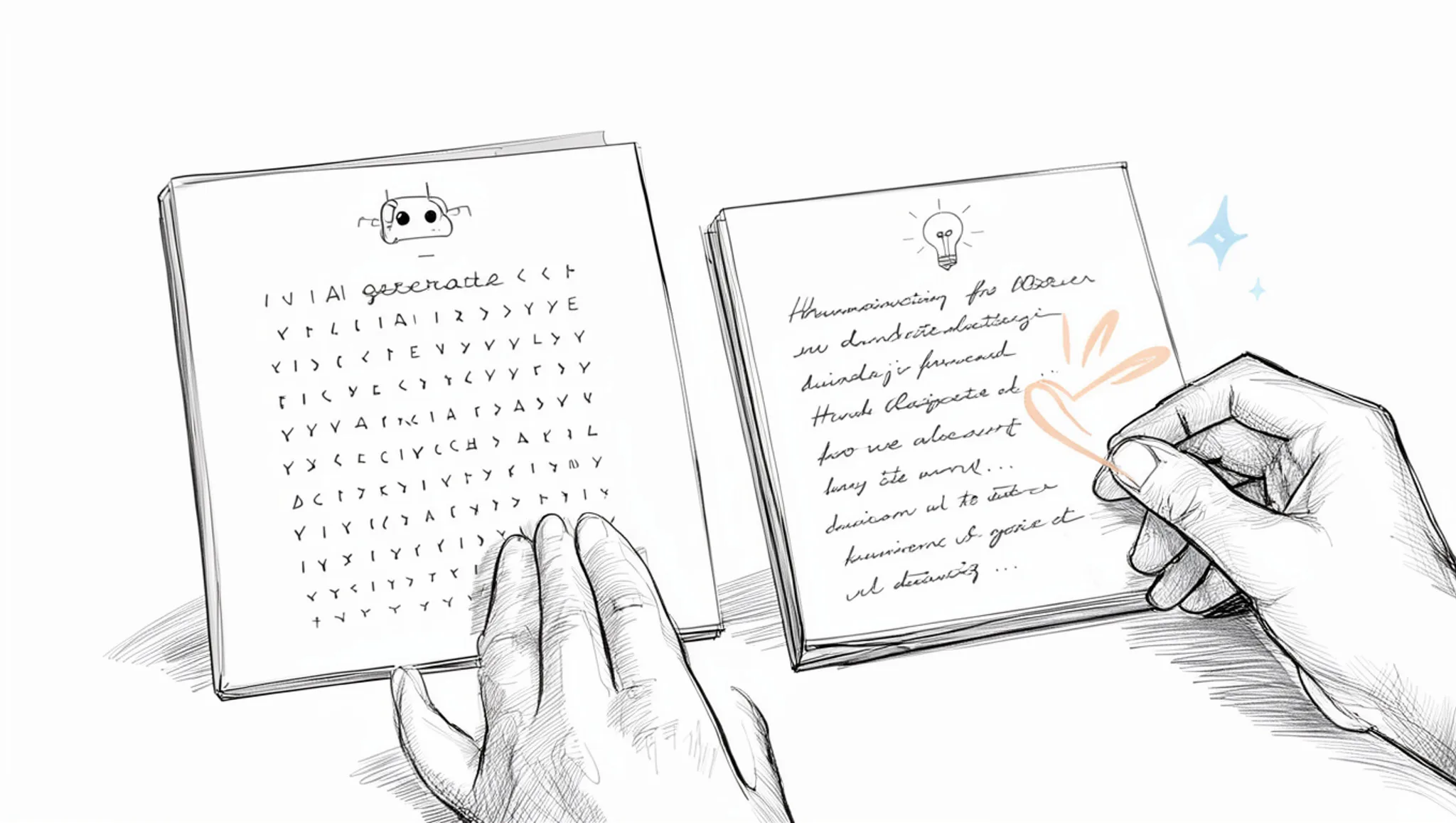
The first checks are sentence level, because that is where automated detection fires. Detectors score text on predictability, meaning how likely each word is, based on the words before it. Uniform mid-length sentences with tidy transitions score as highly predictable, the same signal as machine writing.
That matches the definition Reddit threads keep landing on, that an AI humanizer is any tool or method that adjusts text so it reads less like a machine's output. The wording is broad on purpose. A humanizer that rewrites every sentence into the same new rhythm just trades one predictable pattern for another.
Quillbot's AI Humanizer works at this layer by varying sentences while keeping your meaning, and Word Spinner pairs a rewrite with a detector you can run on the result. Its advanced rewriter walkthrough covers how much original phrasing survives that pass.
Detectors check three things first: whether three consecutive sentences fall in the same 20 to 30 word range, whether transition words like "moreover" appear more than twice per 200 words, and whether each paragraph's opening sentence is shorter than the paragraph's average. Fix those three and you have addressed the surface patterns that trigger most flags.

The humanize AI text Reddit checklist: what to verify
Run these six checks on a draft before you decide whether you need a humanizer at all. Every item is observable, so you can mark it pass or fail in the Done column without guessing. The order matters: the first three checks fix what readers react to, and the last three tell you whether a tool is worth reaching for. None of these checks requires a subscription, and none of them takes more than a few minutes.
| Task | Why it matters | Done |
|---|---|---|
| Read the opening sentence of every paragraph aloud and flag any that begin with "Moreover", "Furthermore", "In addition", or "Note that", then rewrite each flagged opener so the paragraph starts on its actual subject. | A paragraph that announces its own function before it says anything is the clearest sign a machine drafted it, and the repair takes seconds. Readers skim openers first, so a weak one loses them before the point arrives. | |
| Count consecutive sentences of similar length. If three in a row land within two words of each other, rewrite the middle one so it runs noticeably shorter or longer than the sentences around it. | Even rhythm is what readers notice first, before they can name what feels off, and it is the pattern detectors weigh most heavily. One short sentence in the middle breaks the run. | |
| Search the draft for words you would not say out loud, such as "utilize", "delve", "pivotal", "facilitate", and "subsequently", then swap each one for the plain word you would actually use in conversation. | Vocabulary that never appears in speech is the fastest tell that a person did not write the sentence, and a synonym swap does not fix it. Reach for the word you would text a colleague. | |
| Highlight every claim that carries a number, a date, or a named source, and confirm you can point to where that detail came from, not just that it sounds plausible. | A humanizer rewrites wording but cannot verify a fact, so an unsupported claim stays wrong however natural the sentence reads. Check the source before you check the phrasing. | |
| Paste the draft into an AI detector such as Word Spinner or zerogpt.com, record the percentage, make your edits, then run the same text again and compare the two readings. | One reading tells you little on its own; the gap between two readings shows whether your edits actually moved the text. Detectors disagree with each other, so compare like with like. | |
| Ask one person who reads your writing regularly to read the first 100 words and say whether it sounds like you, then note which phrase gave it away. | Someone who knows your voice catches borrowed phrasing faster than any tool, and the phrase they name is the one to rewrite first. Ask them to point at the sentence, not the whole draft, so you know exactly what to change. |
Score the list honestly, because a draft that fails three checks needs editing rather than a humanizer. The first three items cover what readers and detectors react to most, and they take nothing but a careful pass. A draft that fails one check is normal; a draft that fails four is one you wrote too fast.
If the draft still reads flat after all six, that is when a rewriting tool earns its place, and whether you can rely on a humanizer at all is the next decision to make. Two reviewers working from this list should reach the same verdict on the same draft, which is what makes the checks usable.
Print the table and keep it beside the draft while you edit, because the checks work best in order. Fix the openers first, then the rhythm, then the vocabulary, and only then look at what a detector reports.
A draft that passes the first three checks rarely needs anything else, and one that fails them will keep failing no matter how many times you run it through a rewriting tool. Run the list again after any rewrite, because edits can reintroduce the same patterns. If you cannot tell whether a check passed, sharpen it until the answer is obvious.
Technical checks after you humanize AI text from Reddit advice
Reddit threads about humanizing AI text spend most of their length comparing tools, then stop. The checks below are mechanical, and you run them on the finished draft rather than on the advice you copied from a thread.
Start with sentence length. Detectors and picky editors both react to uniform rhythm, so count words per sentence across three consecutive paragraphs. If every sentence lands between 14 and 18 words, split one and merge two others until the spread widens.
Vocabulary ownership matters as much as rhythm. Scan for words you would never say out loud, such as delve or moreover, and swap in phrasing you use in email. Humanizers that paraphrase, including several in this roundup of writing assistants that also humanize AI text, can replace a specific claim with a vague one. Grammarly's AI humanizer names preserving meaning, tone, and voice as its aim.
- [] Every fact, number, and name matches your source notes.
- [] One sentence is at least 10 words shorter than the longest in its paragraph.
- [] No word appears that you would not say aloud to a colleague.
- [] A 300-word sample lands in whatever range your detector calls human.
- [] The opening sentence states your conclusion instead of summarizing the topic.
- [] Reading the first two paragraphs aloud produces no stumble.
Skip this group and you ship a draft that reads fine to you and flat to everyone else, which is the failure those threads keep describing.
Synonym swaps do not survive paragraph-level checks
The advice repeated across humanize AI text Reddit threads (swap a few synonyms, break up the long sentences, add a contraction) holds up on short passages. On a 900-word draft it usually fails. What reads as machine-written is uniformity across the whole piece: ten paragraphs of matching length, each making one point and then stopping.
The condition that flips the usual advice is length. Past roughly two or three hundred words, word-level edits stop paying off, and the changes that move the needle happen at paragraph and document level. Vary paragraph length hard, cut the section that repeats the point above it, and add one detail specific enough that nobody else could have written it.
Grammarly's AI Humanizer aims to keep your meaning and tone while changing the wording, which is still a sentence-level fix, and it runs into the same ceiling once the document gets long.
The rule of thumb: under 150 words, edit by hand, because you can rewrite the whole thing faster than you can paste it anywhere. Over 500 words, do both. Rewrite the structure yourself, then humanize the full passage and check it with an AI detector before you send it.
Frequently asked questions about humanizing AI text
Does humanizing AI text actually get past AI detectors?
No tool guarantees a pass, because detectors score writing patterns rather than authorship. They measure how predictable each word choice is and how much sentence length varies, so a rewrite that changes those patterns can shift the result. Detector updates can undo that shift within weeks, so treat any pass as a snapshot rather than a verdict. Run the same paragraph through two detectors and compare; when they disagree, edit by hand.
Is a free AI humanizer good enough for everyday writing?
Yes for short pieces such as emails, cover letters, and discussion posts. Free tiers cap how many words you can process in one pass, so a long essay gets split and the voice drifts between the parts. For a 300-word email that limit never matters; for a 3,000-word report it does. Word Spinner's Pro plan, from $8 per month, supports unlimited use.
Can you humanize AI text without a tool?
Yes, and for anything under a few hundred words it is usually faster than pasting text into a website. Read the draft aloud and mark every sentence that sounds like a press release, especially ones that open with "Moreover" or stack three adjectives before a noun. Replacing one abstract claim with a specific detail from your own week does more for the tone than any synonym swap.
What is the most common mistake people make when humanizing AI text?
Rewriting the entire draft in one pass. A blanket rewrite flattens the paragraphs that were already fine and leaves the same flat rhythm with different words. Mark the two or three paragraphs that read like ChatGPT, fix those by hand, and leave the rest alone. ChatGPT tends to give itself away in the opening line and in any list of three, so start there.
How do you check whether humanized text still sounds like you?
Compare it against something you wrote before you started using AI. If the rewrite leans on words you would never say out loud, such as "utilize" or "furthermore", it went too far. Word Spinner pairs a free humanizer with an AI content detector, so you can rewrite a paragraph and check it without switching tools. Read the final version aloud once; any sentence you stumble over is one to cut.
Final verdict on humanizing AI text
Word Spinner is the tool to reach for first. It puts the humanizer, the AI detector, and the paraphraser in one place, so you can rewrite a draft and immediately check whether the changes held up. Start with the step-by-step humanizing walkthrough, then run your own text through Word Spinner before you send anything.
The rule that survives every Reddit thread: humanize only what you can defend. If the draft is yours and the ideas are yours, one pass removes the stiff phrasing. If the draft is machine-written from a brief you never read, no tool fixes that.
Choose differently when your text is already clean and you only need light touch-ups. A general assistant such as Grammarly's AI humanizer covers that narrow case fine.
Next: pick one paragraph, run it through a detector, humanize it, and compare the two versions side by side.