
What your AI checker percentage actually means
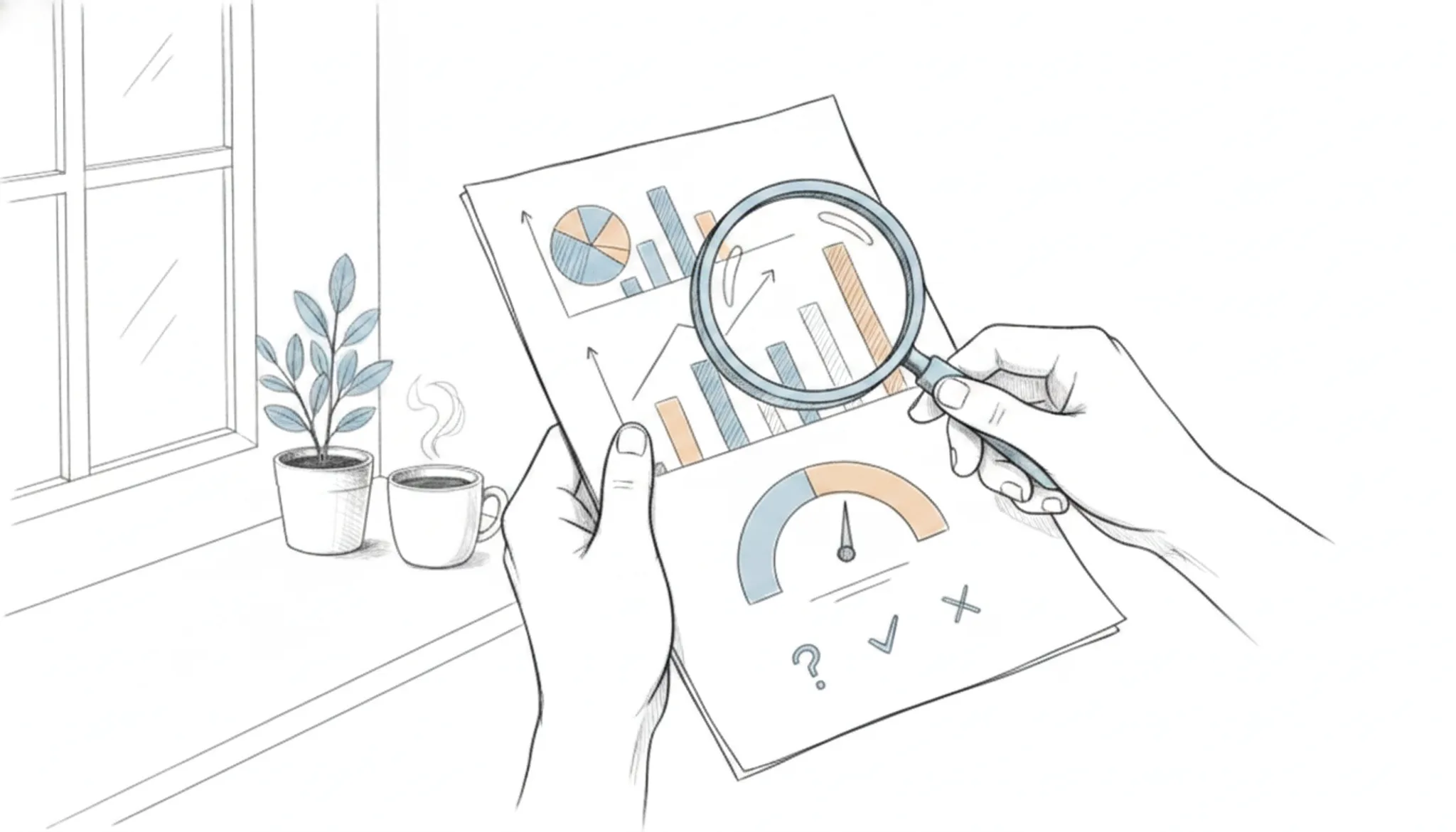
You've just run a piece of text through an AI detector and it spat back a percentage. 75% AI-generated. 30% human. Maybe 0%, you're safe.
But what does that number actually tell you? Not much, unless you know how the detector arrived at it.
The problem is that an AI checker percentage isn't a simple yes-or-no verdict. It's a probability estimate shaped by the tool's training data, the length of your text, and the specific model that trained it. Without understanding those factors, you risk trusting a score that may be misleading.
We'll also show you how Word Spinner, a tool built for AI writing and humanization, can help you make sense of your results and adjust your content accordingly.
Key takeaways
Understanding your AI checker percentage is more nuanced than a single number.
- Cross-check your percentage across multiple detectors to get a reliable range.
- Ignore the percentage on texts shorter than 150 words; it is statistically unreliable.
- Treat a high percentage on heavily edited text as a possible false positive, not a final verdict.
What does the percentage on an AI checker mean?
Your AI checker percentage is a probability estimate of how much of the text was likely generated by AI, not a definitive label. A score of 100% means the tool is highly confident it was AI-written, but false positives happen. A low score does not guarantee human authorship either.
How do AI detectors calculate the AI checker percentage?
The percentage on an AI checker comes from a classifier model that estimates the probability your text was machine generated. Most detectors, including Quillbot's AI detector, produce a score from 0 to 100 percent, where a higher number means the model is more confident the text is AI written.
The model learns from large datasets of human and AI generated content, spotting statistical patterns like uniform sentence length, repetitive word choices, and low predictability in word choice and sentence structure. The exact training data and algorithm differ per tool, so the same text can yield different percentages. For a deeper look at how one popular detector works, read our breakdown of what Quillbot's AI checker catches and misses.
The score is a statistical estimate, not a definitive verdict, and becomes more reliable with longer texts (most tools require a minimum of 80 words).

Reasons your AI checker percentage may be misleading
The percentage is an estimate, not a hard label. Several factors can distort it.
Text length. Most detectors, including GPTZero, need at least 200 words for a stable score. Short text swings wildly between scans.
Training gap. A detector trained on older GPT-3 outputs may flag GPT-4 text as human, because it hasn't seen those patterns. Running the same text through a newer tool like ZeroGPT often gives a different result.
Formal content. Technical, academic, or legal writing shares predictable patterns with AI, causing false positives. A review of 30 detectors found formal text gets flagged more often than casual prose.
These variables mean the same passage can get scores from 10% to 90% depending on the tool and context. Knowing them helps you interpret your AI checker percentage, and decide whether to use a tool like Word Spinner's grammar checker to adjust your text before re-scanning.
How do I get a reliable AI checker percentage?
A single percentage from one tool is not a verdict. Cross-check and inspect for a clearer picture.
- Run your text through three detectors: Use GPTZero, Quillbot, and Grammarly. If their scores fall within 10% of each other, the number is more trustworthy. A wide spread means the result is uncertain.
- Inspect the highlighted passages: Detectors color the suspicious sections. A 30% score from one flagged block is different from 30% spread across ten lines. Look at what the detector actually caught.
- Rewrite what gets flagged: Take the highlighted sentences and rewrite them in your own voice. Add a concrete detail or change the sentence structure. Then rescan with the same tool. A decrease of 15% or more shows the detector reacts to surface style, not content.
- Compare against the Scribbr detection guide: Scribbr's tool explains its reasoning. Our breakdown of Scribbr's AI checker covers what patterns it targets. That context helps you judge whether a flag is meaningful or noise.
What features make an AI checker percentage more reliable?
The reliability of an AI checker percentage depends on several features built into the tool. First, the size and diversity of the training data matters. A detector that learns from a broad range of AI models (ChatGPT, Claude, Gemini) and writing styles gives a more balanced probability estimate. Second, the ability to detect paraphrased content.
Some checkers only flag exact pattern matches, while others analyze predictability and variation to catch rewritten text. Third, transparency in the score. Tools that show which sentences were flagged and why allow you to verify the percentage yourself. Fourth, language support.
A checker that only works on English text will give unreliable percentages for content in other languages. The French AI checker guide from Word Spinner explains how detection varies by language. Finally, a minimum character requirement. Most reliable checkers need at least 80 words to produce a meaningful percentage, as QuillBot and others note.
Without these features, a percentage is just a number with no context.

How do different AI checkers score the same text?
Run the same paragraph through five detectors and you will likely get five different percentages. A 200-word passage written by ChatGPT might score 87% on GPTZero , 72% on Quillbot , 94% on ZeroGPT , and 68% on Grammarly . The variation comes from each tool using a different classifier model trained on different data.
That is why relying on a single percentage from one tool is risky. The same text that looks "highly likely AI" on one checker can appear "mixed" on another. Comparing scores across tools gives you a more honest picture than any single number ever could.
Best practices for responding to your AI checker percentage
A high AI checker percentage is not a final verdict. Use it as a starting point for revision.
- Review highlighted sentences first: Tools like GPTZero and QuillBot flag specific phrases. Rewrite those sections in your own words rather than overhauling the entire text.
- Cross-check with a second detector: A single tool's score can be off. Run the same text through ZeroGPT or another free detector to see if the percentage changes.
- Use a humanizer for stubborn text: If rewriting doesn't lower the score, try a rewriting tool like Word Spinner that adjusts phrasing to sound more natural.
- Re-run the original detector: After editing, run the text through the same tool you started with. A lower percentage confirms the rewrite worked.
AI checkers compared: GPTZero, QuillBot, Grammarly
This table compares three common AI checkers on two criteria: the reader they serve best and the trade-off to accept.
| Option | Best for | Key trade-off |
|---|---|---|
| GPTZero | Educators checking student work | Flags legitimate human writing as AI |
| QuillBot | Writers needing a quick probability score | Requires 80+ words to scan |
| Grammarly | Professionals wanting integrated grammar + AI check | Free version only gives a basic percentage |
Use this table to pick the tool that matches your context: education, casual, or professional.
What are the risks of relying on an AI checker percentage?
The biggest risk is treating the percentage as a verdict. A false positive can flag your own original writing as AI generated, which matters if a teacher or employer runs the same text through a different detector. For example, GPTZero has been known to score highly repetitive or formal text as AI, even when a human wrote it.
A piece written by Claude may score lower than the same prompt written by ChatGPT. Relying solely on one percentage can also lead to over-editing, making your prose sound unnatural. The safest approach is to use the number as one signal among several, not as the final word.
The text length blind spot
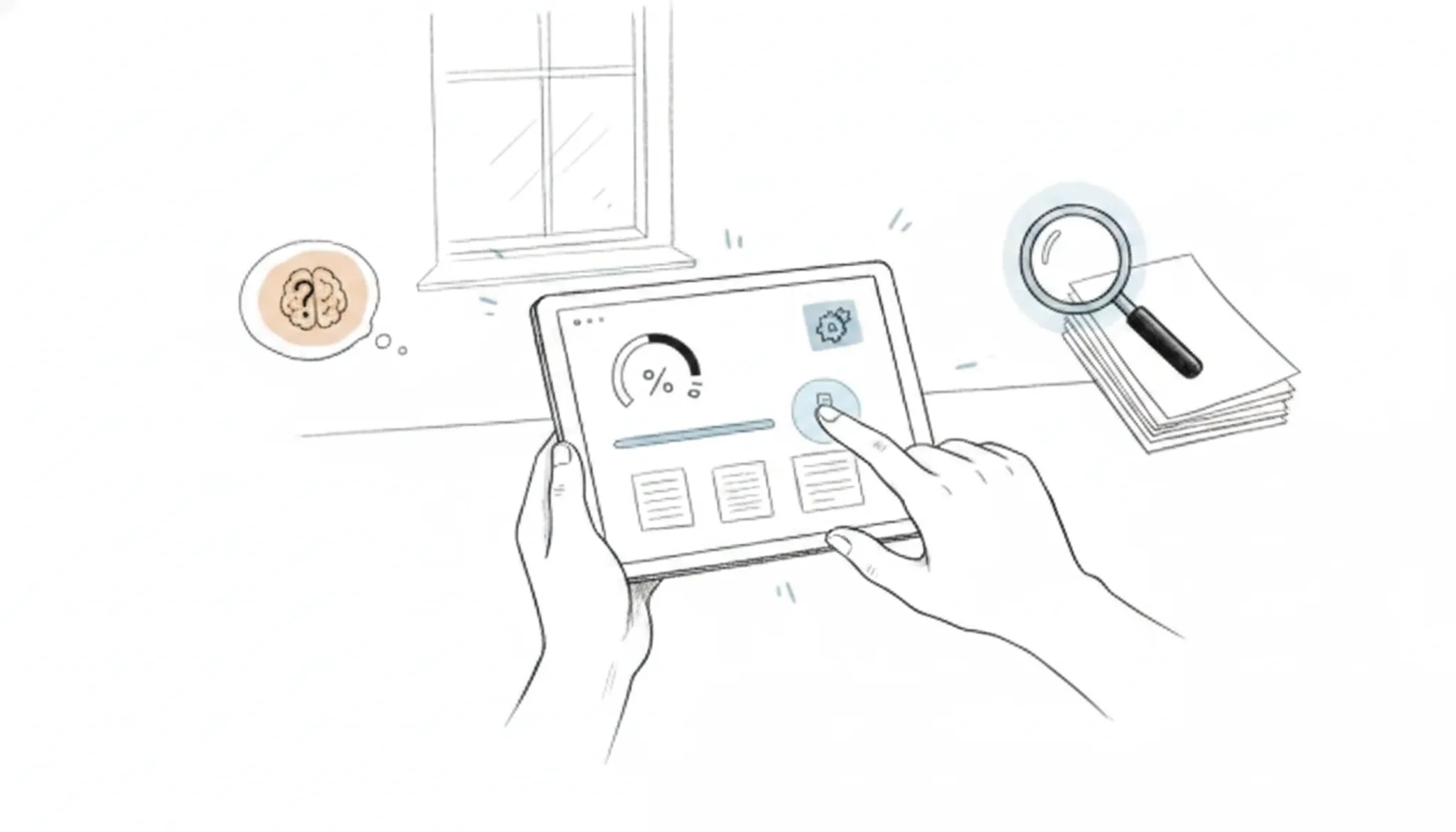
Most AI checkers warn that results are unreliable below a certain word count, but many users ignore that. QuillBot requires at least 80 words to scan. Run a 50-word paragraph and you might get a 95% AI score that flips to 25% when you add another 100 words of the same style.
Frequently asked questions about AI checker percentage
What is a good AI checker percentage to aim for?
Aim for a score below 20% if your goal is to pass as human-written. Many institutions set a flagging threshold around 30%. There is no universal pass/fail number. The same text can score 10% on one tool and 40% on another.
Focus on the tool your reviewer uses, not the lowest number you can find.
Can AI checker percentage be wrong?
Yes, regularly. False positives happen when human writing matches patterns the detector learned from AI text. False negatives occur when AI text is rewritten just enough to evade detection. The percentage is a probability estimate, not a fact.
No scanner is 100% accurate.
How to interpret conflicting percentages from different tools?
Take the highest score as the most cautious reading. If one tool says 5% and another says 65%, your text has features that some models flag. Run the text through three tools, average the scores, and treat the result as a range. The conflict itself tells you the text is borderline.
How to lower your AI checker percentage?
Rewrite sentences to vary length and structure. Add personal examples, specific dates, or regional phrasing a language model would not invent. Replace common transitions like "furthermore" with conversational alternatives. Run the revised text through a checker to see if the percentage drops.
There is no guaranteed fix.
Does a 0% AI checker percentage mean the text is human?
No. It means the detector did not find enough statistical patterns to flag it. Some AI-generated text passes through cleanly, especially if heavily edited or generated with a low-temperature model. A 0% score is a useful signal but not proof.
Sources:
- QuillBot AI Detector documentation (Quillbot)
- GPTZero official site (Gptzero)
- ZeroGPT (Zerogpt)
- Grammarly AI detection (Grammarly)
- Pangram review of 30 AI detectors (Pangram resources)
- Word Spinner guides (Word-spinner resources)
Final verdict on your AI checker percentage
Treat your AI checker percentage as a directional signal, not a sentence. For the most reliable reading, pair a detector with a tool that can adjust the text when needed.
Word Spinner handles both sides of that workflow. It checks your content and lets you rewrite flagged sections in one place. That is the practical next step when the percentage is not what you need.
If your work is academic and your institution requires a specific detector, use that tool instead. For everything else, this combination of detection and rewriting saves time.